


Introduction
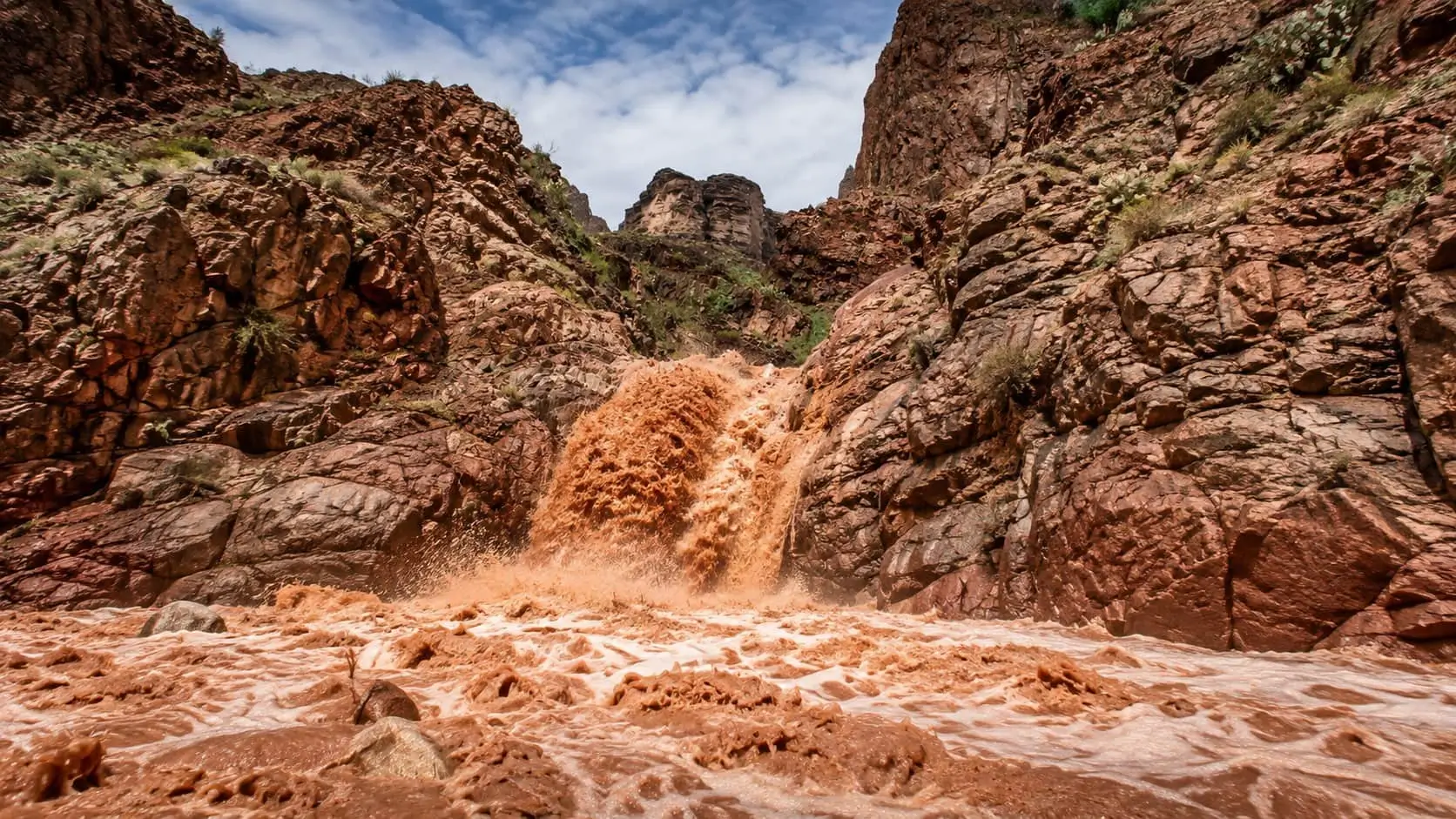
The words grand canyon sturzflut may sound surprising at first. The Grand Canyon is widely associated with dry rock, vast cliffs, intense sunshine and the slow-moving Colorado River. Yet the same landscape that appears dry and stable can become extraordinarily dangerous when a powerful thunderstorm releases a large amount of rain over the canyon or its surrounding drainage areas. A flash flood can develop with astonishing speed, sending muddy water, rocks, trees and other debris through normally dry washes and narrow tributaries.
That danger became painfully clear on August 29, 2026, when a significant flash-flood event struck Bright Angel Canyon and the Phantom Ranch area. The National Park Service reported that flooding began at approximately 2:30 p.m. and caused extensive damage. Bridges were destroyed or damaged, trails were affected, debris was carried toward the Colorado River, and dozens of people required evacuation. The event also disrupted the water system serving the inner canyon and Grand Canyon Village.
The incident is a powerful reminder that the Grand Canyon’s greatest weather hazards are not always visible from the rim. A visitor may stand beneath a blue sky while rain falling miles away is already sending a wall of water toward a lower canyon. Understanding how these floods form, why the terrain amplifies them, and what hikers should do when conditions deteriorate is essential for anyone exploring the region.
Why Flash Floods Happen in the Grand Canyon
The Grand Canyon has an unusual combination of geography and climate that makes flash flooding possible. Much of the surrounding landscape is arid, meaning the ground can have limited ability to absorb intense rainfall in a short period. When a thunderstorm releases a sudden burst of water, runoff can race across exposed rock and soil before funneling into gullies, washes and tributary channels.
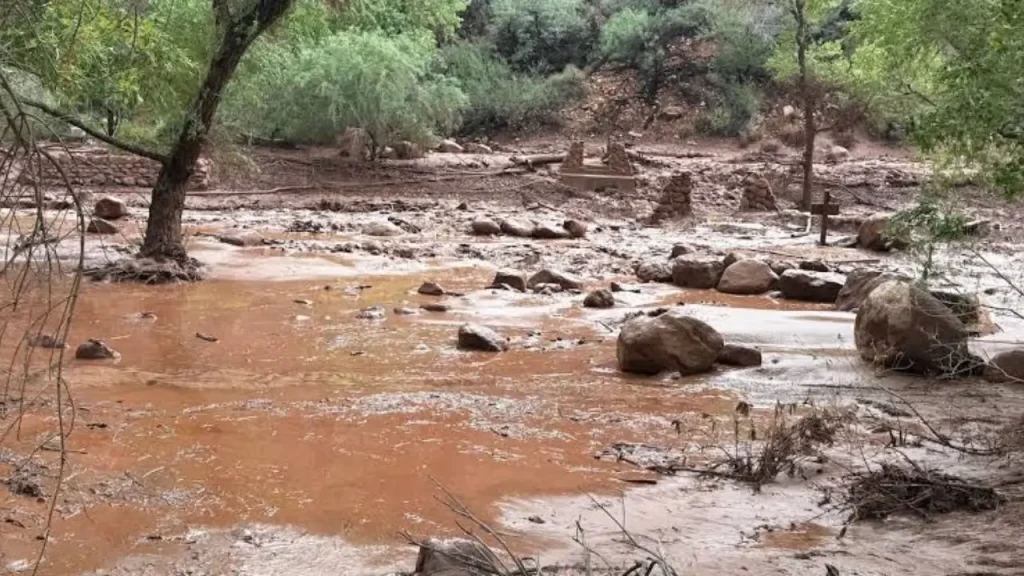
The canyon itself then acts like a giant natural drainage system. Water that falls on higher ground does not necessarily remain there. It moves downhill, sometimes through a complex network of channels that converge as they descend. A storm that seems relatively small from a distance can therefore produce a surprisingly powerful flow in a narrow canyon. The National Park Service warns that flash floods may occur even when the storm itself is not directly overhead, because water can travel considerable distances through the drainage network.
The summer monsoon factor
The greatest flash-flood concern generally comes during the summer monsoon season. By midsummer, moisture enters the southwestern United States, and heating over the desert helps generate powerful thunderstorms. At the Grand Canyon, mornings can be bright and calm before clouds begin building later in the day. Some storms produce little rainfall at ground level, while others release extremely intense localized downpours.
That unpredictability is part of the danger. A forecast for thunderstorms does not mean that every location in the park will receive heavy rain. Instead, one drainage basin may receive a tremendous amount of water while another nearby area remains relatively dry. The National Park Service specifically identifies July, August and early September as periods when severe thunderstorms and sudden flash floods can develop rapidly.
The recent Bright Angel Canyon flood demonstrates how quickly those conditions can become serious. Heavy rainfall caused water levels to rise rapidly and produced destructive flows through the canyon. Reports indicated that the flood damaged infrastructure and resulted in evacuations from affected areas.
The 2026 Grand Canyon Flash Flood and Its Consequences
The August 29, 2026, event was more than a temporary surge of water. It became a major emergency because the flooding struck an area containing trails, campgrounds, lodging facilities, bridges, water infrastructure and visitors. Bright Angel Canyon and the Phantom Ranch area sit deep within the Grand Canyon, where access is naturally difficult and emergency operations can be challenging.
According to the National Park Service, 62 people had been evacuated from Phantom Ranch and the lower North Kaibab Trail by the morning of August 30. Additional evacuations were being coordinated from Cottonwood Campground and Phantom Ranch. Several key locations, including Phantom Ranch, Bright Angel Campground and the North Kaibab Trail, were closed following the flooding.
| Aspect | Grand Canyon Flash Flood Details |
|---|---|
| German Term | grand canyon sturzflut |
| Main Cause | Intense thunderstorms and sudden heavy rainfall |
| Highest-Risk Season | Summer monsoon season, especially July to early September |
| Flood Development | Can occur within minutes after heavy rainfall |
| Major Danger | Fast-moving water, mud, rocks, trees and other debris |
| Affected Areas | Canyons, washes, tributaries, trails and low-lying areas |
| 2026 Major Event | Significant flooding occurred in Bright Angel Canyon and the Phantom Ranch area |
| Infrastructure Damage | Trails, bridges and water infrastructure were affected |
| Wildfire Connection | Burned watersheds can increase runoff, erosion and debris-flow risks |
| Main Safety Action | Move immediately to higher ground |
| What to Avoid | Do not enter washes or attempt to cross dangerous floodwater |
| Best Preparation | Check weather forecasts, understand the route and monitor changing conditions |
The human consequences were even more serious. News reports based on information from authorities stated that at least one person had died and that approximately 15 people were missing or unaccounted for as search-and-rescue operations continued. A 46-year-old man’s body was recovered near Crystal Rapids along the Colorado River.
Damage beyond trails and bridges
Floodwater in a canyon is not simply water flowing over a path. It can carry enormous amounts of sediment and debris. Rocks are loosened, trees can be swept downstream, trails can be carved away, and bridges can be undermined or destroyed. A drainage channel that looks harmless on a dry afternoon can become an extremely powerful force during a major storm.
The 2026 flooding also damaged a critical water pipeline. That infrastructure is particularly important because the inner canyon and Grand Canyon Village depend on a complex water-supply system. The damage forced emergency conservation measures and contributed to the suspension of overnight lodging in affected areas while officials assessed the situation.
This illustrates an often-overlooked aspect of natural disasters: the consequences can continue long after the rain stops. Roads, trails, water systems and communications infrastructure may need inspection and repair. In a remote environment like the Grand Canyon, even relatively small infrastructure failures can create major logistical problems.
Why the Grand Canyon Landscape Makes Flooding So Dangerous
The Grand Canyon’s spectacular scenery is also one reason flash floods can become so hazardous. Steep walls and narrow tributary canyons concentrate water into relatively confined spaces. Instead of spreading across a broad flat plain, runoff can be forced into channels where its speed and destructive power increase.
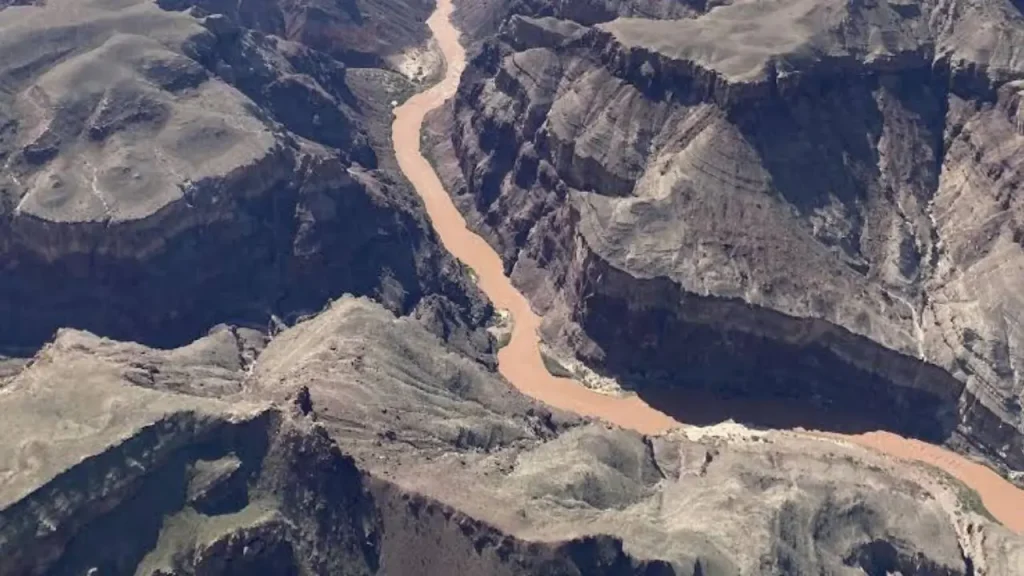
The elevation differences are also significant. Water moving from higher terrain toward the Colorado River can descend thousands of feet through the canyon system. Gravity provides a constant source of energy, while rocks and sediment are picked up along the way. A flood therefore may behave less like a shallow sheet of rainwater and more like a moving mixture of water, mud, stones and vegetation.
The National Park Service describes flash floods in Northern Arizona as capable of moving through normally dry streambeds within minutes. It also warns that hikers have been killed by floods generated by thunderstorms many miles away.
Burned landscapes can increase the danger
Wildfire adds another layer to the problem. Vegetation normally helps slow runoff and stabilize soil. After a severe fire, however, the landscape can become much more vulnerable to rapid runoff and erosion. Soil conditions may change, vegetation cover is reduced, and heavy rain can carry ash, sediment and debris into drainage channels.
This became particularly relevant after the Dragon Bravo Fire, which affected watersheds draining toward the Colorado River. The National Park Service has warned that several burned watersheds, including Bright Angel Creek, have increased flash-flood and debris-flow risks during monsoon season and other heavy rain events.
The result is a dangerous combination: intense rainfall, steep terrain and a watershed that may respond more rapidly than visitors expect. A storm does not have to be directly above a hiker to create a life-threatening situation.
How Hikers Can Recognize and Respond to a Flash Flood
One of the most important lessons from the Grand Canyon is that visitors cannot rely on the appearance of the sky directly above them. A person standing in a canyon may see sunshine while rain is falling somewhere upstream. The first warning may come from the water itself.
A sudden change in water color is one clue. Clear or relatively calm water may become muddy as sediment begins moving downstream. The water level may rise unexpectedly, debris may appear, or the sound of rushing water may become louder. These changes should never be dismissed as minor weather fluctuations.
If water begins rising, the correct response is to move immediately to higher ground. Do not wait to see whether the water level stabilizes. Do not attempt to cross a flooded stream or trail. The National Park Service specifically advises visitors to move to higher ground when they see or hear a flood coming and warns against trying to outrun floodwater.
Planning before entering the canyon
Good flood safety begins before a hike starts. Visitors should examine the weather forecast, understand the route, identify drainage areas and know where higher ground may be accessible. During monsoon season, afternoon travel through vulnerable canyon areas deserves particular caution.
The National Park Service recommends finishing hikes earlier in the day during monsoon conditions and avoiding washes, streams and other drainage areas when storms are possible. Campers should never assume that a dry wash is a safe campsite simply because there is no water in it when they arrive.
Technology can also help. In 2025, the Grand Canyon introduced a backcountry alert system capable of sending hazard information to satellite messaging devices in areas where cellular service may not exist. The system can provide information related to flash floods and other river or backcountry hazards.
However, technology should supplement rather than replace judgment. Remote parts of the canyon can have limited communication, and weather can change quickly. A visitor who recognizes an unsafe situation should be prepared to change plans rather than continuing simply because an itinerary has already been established.
What the Grand Canyon’s Floods Teach Us About Nature
Flash floods are destructive, but they are also part of the natural processes that have shaped the Grand Canyon. Water is one of the forces responsible for carving, transporting and rearranging material throughout the region. Sediment moves through tributaries, rock is eroded, and channels change their shape after major storms.
The National Park Service notes that flooding has played a major role in shaping the canyon landscape over geological time. Before modern river regulation, the Colorado River experienced enormous variations in flow, including major floods capable of transporting huge quantities of sediment and debris.
This creates an interesting contrast. To a visitor, a flash flood may look like an extraordinary disaster. To the landscape itself, flooding is also part of a much larger natural cycle. The same water that threatens a trail can transport sediment, reshape stream channels and influence habitats along the river and its tributaries.
A changing relationship between people and the canyon
Modern visitors experience the Grand Canyon through trails, bridges, campgrounds, pipelines and other infrastructure. These systems make the landscape accessible to millions of people, but they can also be vulnerable to natural processes that existed long before the infrastructure was built.
That is why recent floods are important beyond the immediate emergency. They remind planners, park officials and visitors that infrastructure in a canyon must coexist with a highly dynamic environment. A bridge may be perfectly engineered under ordinary conditions and still be vulnerable when a large debris-filled flood rushes through its drainage.
The 2026 event also highlights the importance of emergency planning. Evacuating dozens of people from a remote canyon is far more complicated than evacuating people from an ordinary urban neighborhood. Helicopters, trained rescuers, trail access, weather conditions, communication systems and available landing areas can all affect the response.
The lesson for visitors is straightforward: the Grand Canyon should never be treated as a static postcard. Its cliffs may appear permanent, but its weather, streams and tributaries remain active forces capable of changing conditions within minutes.
Conclusion
The grand canyon sturzflut phenomenon is a striking example of how quickly an apparently dry landscape can become dangerous. Intense monsoon thunderstorms, steep terrain, limited absorption of heavy rainfall and narrow drainage channels can combine to produce powerful flash floods with very little warning.
The August 2026 Bright Angel Canyon disaster brought that reality into sharp focus. Lives were lost, people were evacuated, trails and bridges were damaged, and critical infrastructure was affected. The event also demonstrated why weather awareness is essential for anyone entering the canyon, particularly during the summer monsoon period.
For hikers, the most valuable lesson is preparation. Check the forecast, understand the terrain, avoid drainage channels when storms threaten, pay attention to changes in water and be ready to abandon a planned route when conditions become dangerous. The Grand Canyon rewards exploration, but it demands respect. Its beauty comes partly from the same powerful natural forces that can make it hazardous.
10 Frequently Asked Questions About grand canyon sturzflut
1. What does “grand canyon sturzflut” mean?
“Grand canyon sturzflut” is the German expression for a Grand Canyon flash flood. It refers to a sudden, rapidly developing flood caused by intense rainfall in the Grand Canyon region and its drainage systems.
2. Can flash floods happen when it is not raining at the Grand Canyon?
Yes. Rain may fall upstream or in another part of the drainage basin and send water downstream toward a location that remains dry. This is one of the most dangerous characteristics of canyon flooding.
3. When is the Grand Canyon most vulnerable to flash floods?
The greatest risk generally occurs during the summer monsoon season, particularly from July through early September. Powerful thunderstorms can develop rapidly during this period and produce intense localized rainfall.
4. How quickly can a flash flood develop?
Conditions can change within minutes. Normally dry washes and tributaries can suddenly carry fast-moving water after intense rainfall. This is why visitors should react immediately to warning signs rather than waiting to see how severe the flood becomes.
5. What should I do if I see muddy water suddenly entering a canyon?
Move toward higher ground immediately and get away from washes, streams and drainage channels. Muddy water, rising water or floating debris can indicate that a flood is approaching.
6. Is it safe to cross a flooded trail?
No. Fast-moving floodwater can knock a person off balance, hide holes and rocks, and carry dangerous debris. The National Park Service advises visitors not to cross flowing water when conditions are unsafe.
7. Does wildfire make flash flooding worse?
It can. Burned watersheds may have less vegetation and altered soil conditions, increasing runoff and erosion during heavy rainfall. The Dragon Bravo Fire affected several Grand Canyon watersheds that now carry elevated flash-flood and debris-flow concerns during heavy rain.
8. Was there a major Grand Canyon flash flood in 2026?
Yes. A significant flash flood struck Bright Angel Canyon and the Phantom Ranch area on August 29, 2026. The event caused extensive damage and led to evacuations and closures. Authorities also reported fatalities and people who were missing or unaccounted for as search-and-rescue operations continued.
9. Can flash floods change the Grand Canyon landscape?
Absolutely. Floodwater can erode soil, move rocks and sediment, reshape channels and transport debris toward the Colorado River. Flooding is one of the natural processes that has contributed to the continuing evolution of the canyon landscape.
10. What is the best way to prepare for a Grand Canyon flash flood?
Check weather conditions before and during your trip, understand the drainage patterns along your route, avoid washes and narrow canyon areas during storms, carry appropriate communication equipment when traveling remotely, and be willing to change your plans. In the Grand Canyon, flexibility can be a critical part of safety.
