


Introduction
Space Force uniforms are unlike anything else in the U.S. military. They combine familiar military traditions with a visual identity designed specifically for a service whose mission extends beyond conventional battlefields. The United States Space Force, established in 2019, initially relied heavily on uniforms already used by the Air Force while it developed its own distinctive appearance. That approach allowed Guardians to operate immediately without waiting years for an entirely new wardrobe of military clothing.
The result is a fascinating mix of practicality, heritage, and symbolism. The camouflage uniform looks familiar to anyone who has seen modern American military personnel, but its service-specific markings identify the wearer as a Guardian. Meanwhile, the Space Force’s distinctive service dress has been designed to create a stronger identity for the youngest branch of the U.S. armed forces. Its colors, insignia, rank placement, and styling all communicate a connection to space operations while remaining recognizable as military attire.
For people interested in military history, uniforms, or the evolution of America’s space program, space force uniforms offer an unusual story. They show how a new military branch can establish its own culture without abandoning the traditions from which it developed.
1. How Space Force Uniforms Came Into Existence
When the U.S. Space Force was created in December 2019, it did not suddenly have an independent collection of uniforms waiting for its personnel. The new service inherited personnel, facilities, missions, and organizational structures from the Air Force, particularly from units responsible for space operations. Because of that background, Guardians initially wore modified versions of uniforms already familiar within the Air Force.
This was a practical decision rather than a lack of ambition. Designing a military uniform involves much more than choosing colors and sewing on a new patch. Uniforms have to meet standards for durability, comfort, safety, manufacturing, logistics, appearance, and identification. A new branch also needs regulations governing everything from insignia placement to footwear and headgear. Using existing uniforms gave the Space Force time to develop a distinctive visual identity without disrupting day-to-day military operations.
From Air Force Heritage to a New Identity
The early Space Force appearance therefore contained a strong Air Force influence. Guardians commonly wore the Operational Camouflage Pattern, or OCP, that was already standard across much of the U.S. military. The camouflage pattern itself was not designed specifically for space operations because Guardians can work in offices, bases, laboratories, communications facilities, launch-related environments, and other locations where ordinary military field uniforms remain useful.
What made the uniform distinctly Space Force was the identification and insignia attached to it. Space Force tapes and insignia replaced the corresponding Air Force identifiers, giving Guardians a recognizable branch affiliation while retaining a proven uniform system.
| Uniform / Element | Main Purpose | Key Features |
|---|---|---|
| OCP Uniform | Everyday operational duties | Camouflage pattern, durable fabric, Space Force insignia and identification |
| Service Dress Uniform | Formal and ceremonial occasions | Distinctive Space Force styling, formal appearance, branch-specific insignia |
| Physical Training Uniform | Exercise and fitness activities | Designed for comfort, movement, and physical training |
| Space Force Insignia | Identifies the military branch | Distinctive delta-shaped Space Force symbol |
| Rank Insignia | Shows Guardian’s military rank | Space Force-specific rank designs and placement |
| Name Tape | Identifies the individual Guardian | Worn according to applicable uniform regulations |
| Qualification Badges | Shows training or professional qualifications | Authorized badges based on duties and certifications |
| Headgear | Completes the appropriate uniform | Options vary according to uniform and duty requirements |
| Military Boots | Provides protection and support | Durable footwear suitable for operational environments |
| Branch Identification | Distinguishes Guardians from other services | Space Force-specific markings and insignia |
| Ceremonial Details | Supports official appearances | Formal insignia, decorations, and authorized accessories |
| Uniform Regulations | Maintains consistency and professionalism | Rules govern wear, placement, appearance, and authorized items |
That transitional period was significant because it demonstrated an important principle of military clothing: a uniform does more than cover the body. It establishes belonging. Even relatively small details, such as a branch name, badge, or emblem, can transform a familiar uniform into a symbol of a different military culture.
2. The Space Force OCP Uniform and Everyday Operational Wear
One of the most recognizable examples of Space Force uniforms is the OCP uniform. OCP stands for Operational Camouflage Pattern, a camouflage design used extensively by the U.S. military. Although the Space Force’s primary missions may involve satellites, communications, missile warning, navigation systems, intelligence, and other highly specialized activities, Guardians still need practical clothing for military environments.
The OCP uniform is built around functionality. It generally includes a camouflage coat and trousers, appropriate boots, a patrol cap or other authorized headgear depending on the circumstances, and branch-specific identification. The uniform is designed to withstand routine military activity while providing a standardized appearance across the force.
What Makes the Space Force Version Different?
At first glance, a Space Force OCP uniform can look almost identical to an Army or Air Force OCP uniform. The differences become clearer when you examine the markings. Guardians wear Space Force identification rather than Air Force or Army branch identifiers. The Space Force emblem and other authorized insignia help distinguish the wearer.
This distinction matters because military uniforms are designed around a visual hierarchy. A person looking at a uniform should be able to identify the service, the individual’s name, and relevant qualifications or assignments without needing a lengthy explanation. Small patches and insignia therefore carry considerable meaning.
The OCP also demonstrates that being a space-focused military service does not necessarily mean wearing futuristic clothing. A camouflage uniform remains useful because military personnel still work in physical environments. A Guardian may spend one day in a control facility and another working around equipment, visiting an installation, participating in field activities, or supporting an exercise. A dependable operational uniform has to function across those settings.
Why Camouflage Still Makes Sense for Guardians
The presence of camouflage sometimes surprises people who associate the Space Force entirely with satellites and control rooms. But military uniforms are not always designed around the exact environment where a service’s most specialized mission occurs.
Camouflage uniforms provide durability, standardization, and compatibility with existing military equipment. They also allow Guardians to operate alongside personnel from other branches during joint missions and exercises. The Space Force participates in a broader defense structure rather than operating as an isolated organization.
For that reason, the OCP uniform represents practicality more than science-fiction imagery. It tells us that even a military branch focused on space requires personnel who work in ordinary military environments on Earth.
3. The Distinctive Space Force Service Dress Uniform
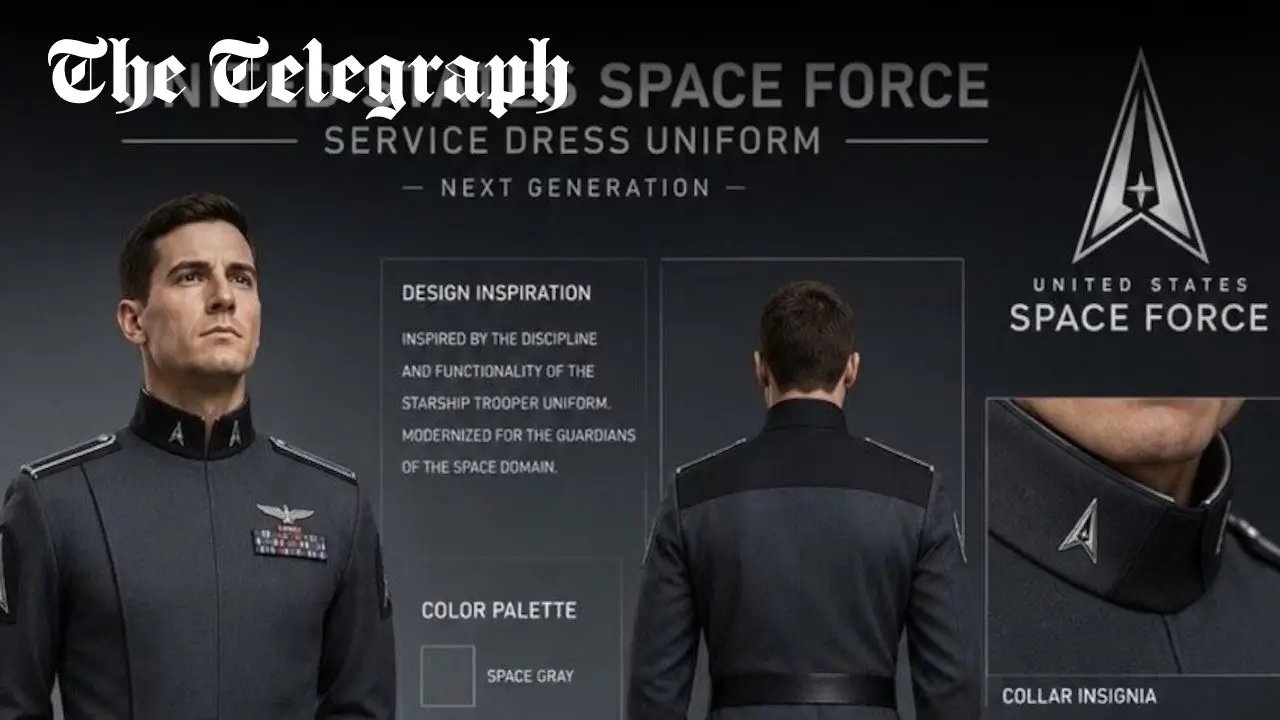
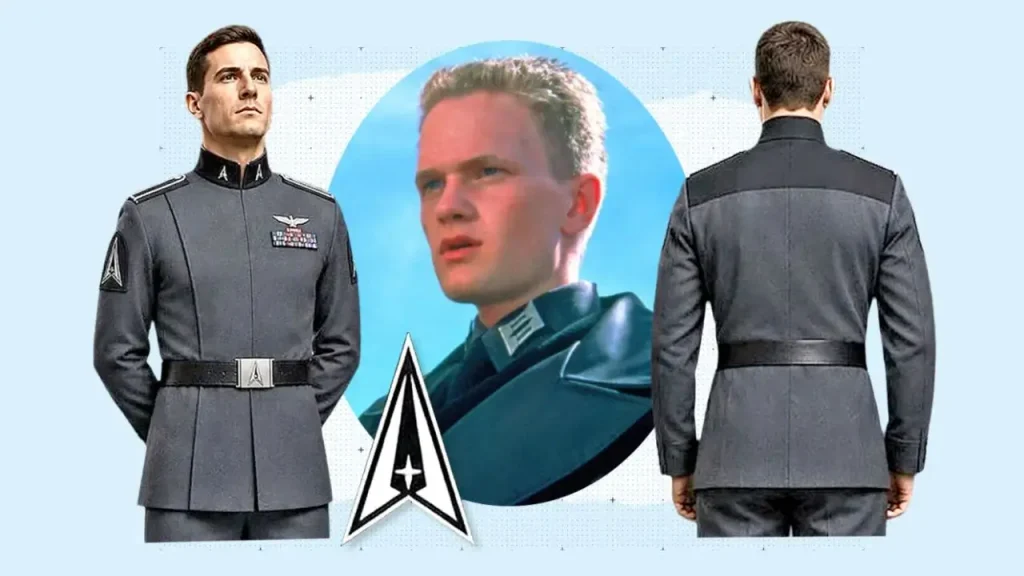
While the OCP provides practicality, the Space Force service dress uniform is where the branch’s personality becomes much more visible. The Space Force has worked to develop a distinctive dress uniform that separates Guardians from their Air Force predecessors and establishes a recognizable ceremonial identity.
The design uses a darker, more formal appearance and incorporates elements intended to evoke the domain of space. Its styling is noticeably different from the traditional appearance associated with many other American military uniforms. The overall effect is formal without attempting to look like a science-fiction costume.
That balance is particularly important for the Space Force. A new military branch needs to look modern, but it also has to appear credible alongside services with centuries of institutional history. The uniform must communicate that Guardians are part of the U.S. military while showing that the Space Force has its own mission and culture.
A Uniform Designed to Represent the Space Domain
The design philosophy behind the Space Force’s dress uniform is closely connected to its identity as a space-focused service. Dark colors naturally suggest the night sky and deep space, while metallic details and carefully positioned insignia reinforce the formal character of the uniform.
The uniform is also meant to look appropriate at ceremonies, official events, and professional settings. This is different from the role of the OCP. A camouflage uniform communicates operational readiness, whereas a service dress uniform communicates military tradition, professionalism, and representation.
The contrast between the two is useful when understanding the broader purpose of military clothing. The same Guardian may have several uniforms because different situations demand different forms of appearance. A uniform worn while performing operational duties does not need to communicate exactly the same message as one worn while representing the service at a formal event.
The Importance of the Guardian Identity
The Space Force’s personnel are officially known as Guardians. That name is itself part of the branch’s identity, and the uniform reinforces that identity visually.
For a new service, establishing a distinct culture can take decades. Uniforms are one of the fastest ways to create visible continuity. New recruits can put on the same insignia and recognize themselves as part of the same organization. Ceremonies become more distinctive. Public appearances become easier to identify. Historical photographs from the service’s early years begin to develop a recognizable visual character.
That is why the service dress uniform matters beyond fashion. It is part of the institutional foundation of the Space Force.
4. Space Force Insignia, Rank, Badges, and Other Details
The most interesting aspects of Space Force uniforms are often the smallest ones. Military uniforms contain an extensive visual language. A patch, pin, stripe, or badge can indicate rank, occupation, qualification, unit affiliation, or service branch.
The Space Force’s most recognizable symbol is the delta-shaped service emblem. The delta has deep associations with space and aerospace imagery, and its use gives the service an immediately identifiable mark. The emblem is strongly connected to the Space Force’s visual branding and appears in official contexts beyond uniforms as well.
Rank insignia are another important part of the uniform system. Guardians use Space Force-specific enlisted and officer rank structures and insignia. Some of these designs differ from those used by the other military services, reinforcing the idea that the Space Force is not simply an extension of the Air Force.
Badges and Professional Qualifications
Military badges can tell a story about a service member’s training and professional experience. Depending on their duties and qualifications, Guardians may wear authorized badges associated with their specialty, assignment, or qualification.
These details are especially meaningful in a technical service. Space operations depend on highly trained personnel working with communications systems, satellites, intelligence, missile-warning capabilities, navigation infrastructure, cyber operations, and other sophisticated systems. A uniform badge can therefore represent substantial education and professional preparation.
Not every Guardian wears the same combination of badges. Uniform regulations determine which insignia are authorized and where they may be placed. This creates a standardized appearance while still allowing individual experience and qualifications to be represented.
Uniform Details Are More Than Decoration
It can be tempting to view military patches and insignia as decorative features, but they have practical and cultural purposes. A properly regulated uniform provides information at a glance.
The same principle applies to the Space Force. A Guardian’s uniform can communicate branch affiliation, name, rank, and qualifications without a spoken introduction. During ceremonies or joint military activities, these visual signals help maintain clarity and reinforce organizational structure.
Over time, those symbols also become part of military heritage. A particular insignia may later remind veterans of a specific era, unit, mission, or generation of Guardians.
5. How Space Force Uniforms Reflect a Modern Military Service
Space Force uniforms are interesting because they represent a military organization operating in a domain that is technologically advanced but still deeply connected to traditional military institutions. Satellites may orbit hundreds or thousands of miles above Earth, yet the people operating and protecting those systems remain members of a disciplined military organization.
That creates a unique design challenge. The uniforms cannot simply imitate science-fiction imagery. They need to function in real workplaces, meet military standards, and fit within the broader U.S. defense establishment. At the same time, they should communicate that the Space Force exists for a specialized purpose.
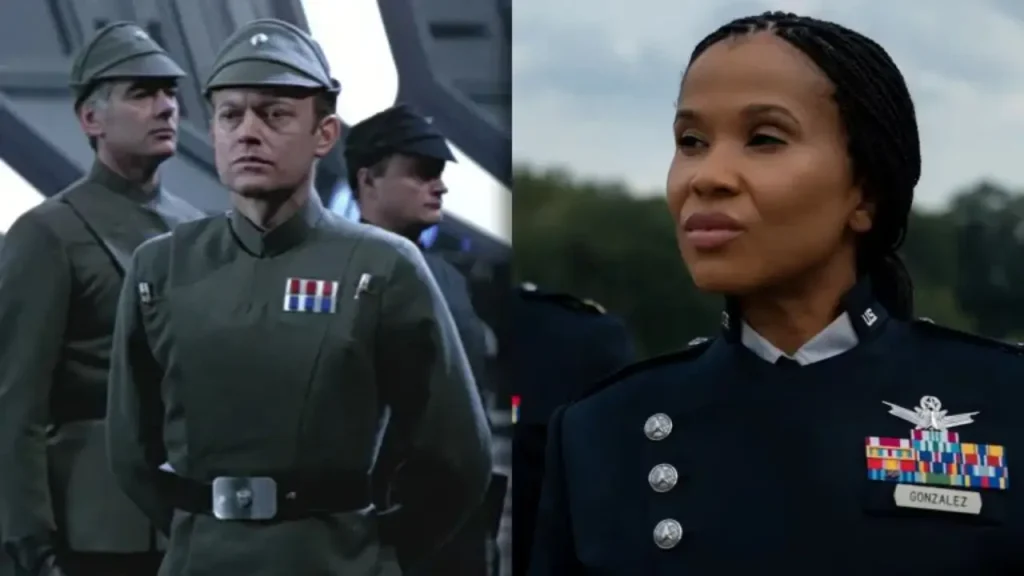
The gradual development of Space Force uniforms reflects that balance. The early reliance on established Air Force uniforms provided continuity, while newer service-specific elements have allowed Guardians to develop their own identity.
Tradition Versus Innovation
Military organizations tend to value tradition. Uniforms are especially powerful symbols because they connect current personnel with those who served before them. Yet the Space Force is also one of the newest branches in American military history, meaning it has an unusual opportunity to create traditions rather than simply inherit them.
Its uniforms are therefore part of an evolving cultural experiment. Future generations of Guardians may look back at today’s designs in the same way modern service members look at uniforms from earlier periods. What appears ordinary now could eventually become a recognizable symbol of the Space Force’s founding era.
The challenge will be maintaining a balance between individuality and continuity. A uniform that changes too frequently can weaken tradition, while one that never evolves can fail to accommodate new technology, operational requirements, or cultural expectations.
Why Uniform Design Matters for the Future
Space operations are changing rapidly. Commercial satellite networks, reusable launch vehicles, advanced communications, cyber capabilities, navigation systems, and increasingly complex space architectures are transforming the strategic environment.
The people working in this field will continue to perform a mixture of highly technical and traditional military responsibilities. Their uniforms will need to reflect that reality. Comfort, durability, safety, professional appearance, and compatibility with equipment will remain more important than futuristic styling.
At the same time, the Space Force will likely continue developing its own traditions. As the service grows older, its uniform system can become one of the clearest visual records of that evolution. What began with inherited uniforms can gradually develop into a distinct Guardian identity recognized around the world.
Conclusion
Space Force uniforms tell the story of a military branch finding its identity. When the U.S. Space Force was established, it made practical sense for Guardians to use established Air Force and broader military uniform systems. That approach provided immediate functionality while allowing the new service time to determine what it wanted to look like.
The OCP uniform remains an excellent example of practicality. Its familiar camouflage design is less about futuristic imagery and more about providing dependable clothing for military operations on Earth. The Space Force-specific markings, insignia, and identifiers give Guardians their own visual identity while preserving compatibility with the wider U.S. military.
The service dress uniform, meanwhile, represents something more symbolic. Its distinctive styling and space-inspired character help establish a separate institutional personality. Alongside rank insignia, badges, and the Space Force emblem, it creates a visual language that belongs increasingly to the Guardians themselves.
Ultimately, space force uniforms are more than clothing. They are symbols of a young military service’s history, mission, professionalism, and developing culture. As the Space Force matures, its uniforms will likely become an increasingly important part of how its traditions are remembered.
10 Frequently Asked Questions About Space Force Uniforms
1. What uniforms do Space Force Guardians wear?
Guardians wear several types of uniforms depending on their duties and the situation. The OCP uniform is used for many everyday operational duties, while a distinctive service dress uniform is used for more formal occasions. Other authorized clothing and physical-training uniforms may also be worn when appropriate.
2. Are Space Force uniforms the same as Air Force uniforms?
Not exactly. The Space Force initially relied heavily on existing Air Force uniform systems because it was created from organizations and personnel with strong Air Force connections. However, Space Force-specific markings, insignia, rank designs, and its developing service dress uniform distinguish Guardians from Airmen.
3. Why does the Space Force wear camouflage?
Space Force personnel still perform military duties in physical environments on Earth. The OCP provides durable, standardized clothing suitable for military workplaces, exercises, installations, and operational activities. The use of camouflage does not mean Guardians are primarily fighting on conventional battlefields.
4. What does the delta symbol on Space Force uniforms mean?
The delta is a major symbol of the Space Force and is closely associated with aerospace and space operations. Its distinctive shape gives the service an immediately recognizable emblem and contributes strongly to the visual identity of the branch.
5. What is the Space Force service dress uniform?
The service dress uniform is the formal uniform associated with the Space Force. Unlike the camouflage OCP, it is intended for formal and ceremonial settings. Its distinctive design helps establish a visual identity separate from the uniforms traditionally associated with the Air Force.
6. What are Space Force members called?
Members of the U.S. Space Force are called Guardians. The term was selected as the official name for Space Force personnel and has become an important part of the service’s identity.
7. Do Space Force Guardians wear military badges?
Yes. Authorized Guardians can wear appropriate military and professional badges based on their qualifications, duties, and assignments. The exact badges worn depend on the individual’s career and the applicable uniform regulations.
8. Are Space Force uniforms designed to look futuristic?
Although some elements of Space Force dress uniforms have a distinctly modern and space-oriented appearance, they are not intended to resemble science-fiction costumes. Military uniforms must remain practical, professional, recognizable, and suitable for real-world use.
9. Why did the Space Force initially use Air Force uniforms?
The Space Force was established as a new military service using personnel and organizations that had previously been part of the Air Force. Continuing to use existing uniforms provided a practical and cost-effective transition while the new service developed its own identity and uniform requirements.
10. Will Space Force uniforms change in the future?
They may evolve as the Space Force grows and develops its own traditions. Uniform changes can result from operational requirements, technology, comfort considerations, regulations, and the desire to strengthen service identity. The uniforms used today may eventually become an important part of the Space Force’s early history.
