


Introduction
The Wahl Sachsen-Anhalt has produced one of the most consequential political results in the state’s recent history. Voters went to the polls on September 6, 2026, to elect the ninth Landtag of Sachsen-Anhalt, and the result delivered a dramatic change in the balance of power. The AfD emerged as the clear strongest party with 43.8% of the second votes, while the CDU, which had dominated the previous election, fell to 17.2%.
The result matters far beyond the borders of the eastern German state. The AfD won 39 of the Landtag’s 83 seats, putting it only three seats short of the 42 required for a parliamentary majority. At the same time, the BSW crossed the five-percent threshold and entered parliament with five seats, creating a difficult situation for the formation of a government.
Sachsen-Anhalt now faces a complicated political phase. The election has changed the strength of almost every major party, produced an unusually fragmented parliament, and raised questions about who can build a stable governing majority. Understanding the election therefore requires more than looking at which party received the most votes. It requires examining the voting system, the parties, the numbers, the issues that shaped the campaign, and the possible political consequences.
The Election Result: A Major Shift in Sachsen-Anhalt
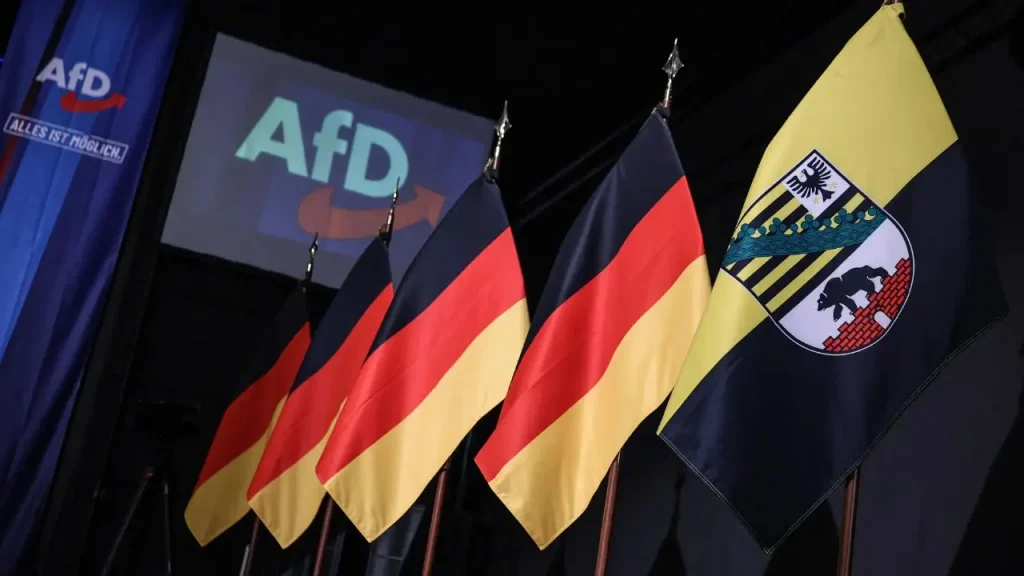
The final preliminary result showed an exceptionally strong performance by the AfD. It received 576,037 second votes, equal to 43.8% of the valid second votes, and won 39 seats. The party also secured 38 of the 41 constituency mandates, demonstrating that its support was not limited to the party list vote. Its 2026 result represents an increase of 23 percentage points compared with 2021.
The CDU experienced the opposite movement. After receiving 37.1% in the 2021 election, it dropped to 17.2% in 2026. The party ended with just 15 seats, compared with 40 previously. This was a particularly significant setback because the CDU had traditionally been one of the central political forces in Sachsen-Anhalt and had governed the state before the election.
How the Other Parties Performed
The SPD received 9.3% and won eight seats. The Greens reached 8.9%, also receiving eight seats, while Die Linke obtained 8.6% and eight seats. The BSW, appearing in its first Sachsen-Anhalt state election, won 5.3% and five seats. The FDP failed to reach the threshold, receiving 2.6% and therefore taking no seats in the new parliament.
The result also produced a much smaller parliament than before. The previous Landtag had 97 seats, whereas the new parliament has 83. That makes every seat particularly important when potential governing coalitions are considered. A party or group needs at least 42 seats to command a majority, leaving the AfD three seats short of that threshold.
Another striking feature was turnout. A total of 1,328,211 people voted, producing a turnout of 77.8%. That was 17.5 percentage points higher than in 2021, when turnout stood at 60.3%. The unusually high participation indicates that the election generated substantial public interest and mobilization.
How the Sachsen-Anhalt Voting System Works
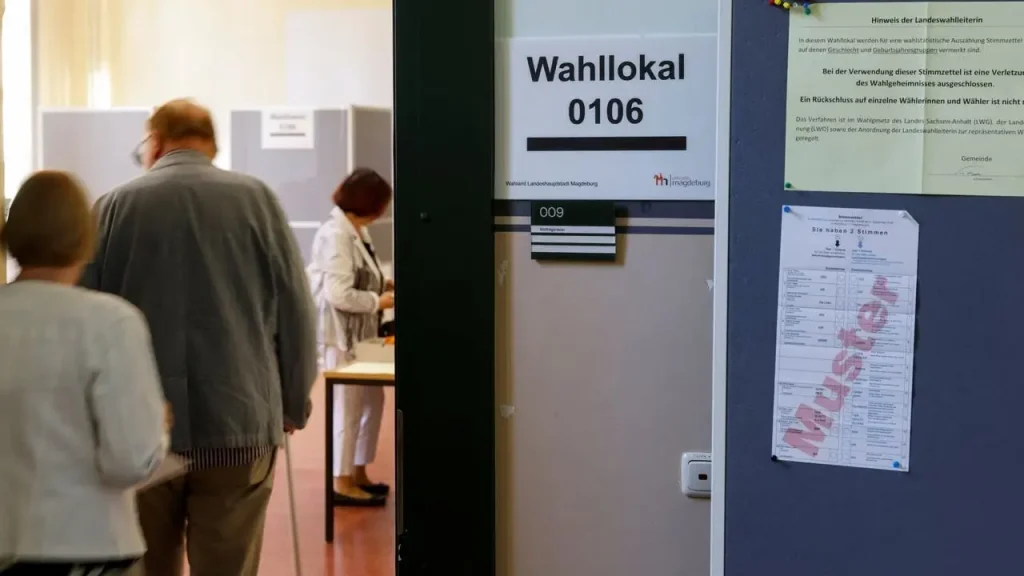
Understanding the Wahl Sachsen-Anhalt requires some knowledge of how the Landtag is elected. Sachsen-Anhalt uses a system involving constituency candidates and party lists. Voters have two votes, and the two votes perform different functions. One vote helps determine a directly elected constituency representative, while the other determines the proportional strength of parties in the parliament.
There are 41 constituencies in the state. In the 2026 election, 41 of the 83 parliamentary seats were filled through constituency elections, while the remaining seats were allocated through the state party lists. This combination allows voters to choose an individual representative while also influencing the overall balance between parties.
Why the Five-Percent Threshold Matters
One of the most important features of the system is the threshold for parties seeking representation through the proportional vote. Parties generally need to reach five percent of the second votes to enter the Landtag through the party-list system, subject to the rules of the state election law.
The 2026 election demonstrated why this threshold can have major consequences. The BSW received 5.3%, narrowly clearing the barrier and gaining five seats. The FDP, despite receiving 2.6%, did not enter the parliament. That difference of only a few percentage points completely changed the parliamentary arithmetic.
This is also why the percentage of votes alone does not tell the entire story. A party can receive millions of votes in a larger election but remain outside a parliament if it does not meet the relevant threshold. Conversely, parties that cross the threshold can become strategically important even when their overall vote share is relatively small.
The Main Political Issues Behind the Election
The campaign took place against a backdrop of strong public debate over migration, economic conditions, public services, security, energy, education and the future direction of Germany. These issues were interpreted differently by different parties, but migration and dissatisfaction with established political institutions became particularly prominent themes.
The AfD’s campaign was built around opposition to current migration policies, criticism of the political establishment and demands for major changes in areas including asylum, deportation and cultural policy. Its leading candidate, Ulrich Siegmund, presented the election as an opportunity for voters to demand a significant political change. The party’s success suggests that these messages resonated strongly with a large section of the electorate.
Economic concerns also mattered. Sachsen-Anhalt has experienced many of the structural challenges associated with parts of eastern Germany, including demographic change, shortages of skilled workers and differences in economic strength between regions. Questions about wages, investment, infrastructure and the future of industrial employment can have a direct influence on how voters evaluate governing parties.
Migration, Security and Social Questions
Migration became one of the defining themes of the campaign. The AfD pushed for significantly stricter policies, while other parties argued that its proposals could have serious social, legal and economic consequences. This disagreement reflected a broader national debate in Germany about asylum policy and integration.
Education and social policy were also relevant. Political arguments surrounding schools, public services, housing and healthcare often have a particularly direct impact on state-level politics. The Landtag is responsible for legislation and spending decisions affecting many areas of daily life, making regional elections more than a referendum on federal politics.
The campaign also took place amid broader disagreements about Germany’s relationship with Russia and support for Ukraine. The AfD has advocated major changes to Germany’s foreign and security policy, while mainstream parties have generally taken a different position. These differences added an international dimension to an election that was formally focused on state government.
What the Result Means for Government Formation
Winning the most votes does not automatically mean that a party can form a government. In Sachsen-Anhalt, the AfD has 39 of the 83 seats, while 42 are needed for a majority. This creates the central political question following the election: how can a government be formed when the strongest party does not have enough seats to govern alone?
The arithmetic is complicated by the positions of the other parties. The CDU, SPD and Greens together hold 31 seats. Adding Die Linke would bring that group to 39, still below the 42-seat majority. The BSW’s five seats could therefore become highly significant depending on which governing combinations are politically possible.
The BSW’s Strategic Importance
The BSW’s entry into the Landtag has given it influence disproportionate to its 5.3% vote share. With five seats, it could become an important factor in coalition negotiations, parliamentary agreements or other arrangements designed to establish a stable government.
However, political arithmetic does not automatically translate into political cooperation. Parties must agree on policy, leadership and the basic direction of government. The question is therefore not simply which combinations have enough seats, but which combinations are politically willing and practically capable of working together.
The AfD has argued that its victory gives it a mandate to govern. Other major parties have rejected cooperation with the AfD, maintaining Germany’s established political practice of keeping the party outside governing coalitions. That creates a difficult situation in which the election winner has the largest parliamentary group but lacks the seats required to govern independently.
Why the Wahl Sachsen-Anhalt Matters Beyond the State
The election has national significance because Sachsen-Anhalt has become another important indicator of the changing political landscape in Germany. The AfD’s 43.8% result is its strongest performance in a Sachsen-Anhalt state election and more than doubles its 2021 result of 20.8% on the second vote.
The CDU’s decline is equally significant. Its 17.2% result was described as the party’s worst-ever result in Sachsen-Anhalt. The contrast between the two major parties illustrates how dramatically the state’s political balance has changed within a single electoral cycle.
This development also matters for national party leadership. Chancellor Friedrich Merz and the federal CDU face pressure whenever the party performs poorly in a major state election. At the same time, the AfD’s success strengthens arguments within that party that its political message is gaining broader acceptance.
A Test for Germany’s Political “Firewall”
Perhaps the most closely watched issue is the relationship between the AfD and other parties. Germany’s established mainstream parties have generally maintained a political barrier against cooperation with the AfD, particularly because of concerns surrounding its positions and the classification of the party by domestic intelligence authorities.
Sachsen-Anhalt therefore presents a difficult test. If no conventional coalition can achieve a majority, politicians may have to consider minority-government arrangements, parliamentary cooperation or other less familiar solutions. Each option carries political risks.
The situation also demonstrates an important feature of parliamentary democracy: winning an election and governing are separate stages. The voters determine the distribution of seats, but elected representatives must then negotiate how the state can be governed. That process can take time, especially when the election produces a fragmented parliament.
What Happens After the Election?
The immediate task is to establish the new Landtag and determine how a government can be formed. The election authority has confirmed the preliminary seat distribution, but the political process continues after the votes have been counted. The parties must assess their options, conduct negotiations and decide which compromises they are prepared to make.
The next phase will therefore be closely watched. The AfD has the largest parliamentary group and can claim the strongest electoral mandate, but it needs additional support to reach a majority. The CDU remains the second-largest party but has suffered a historic defeat. SPD and Greens have enough seats to participate in possible coalition discussions, while Die Linke and BSW could become important depending on the route eventually chosen.
The process also has implications for the next five years. The Landtag is responsible for legislation, the state budget and oversight of the state government. It also elects the minister-president. Whoever eventually builds a governing majority will face the challenge of turning campaign promises into practical policies while managing a sharply divided political environment.
The result has also changed the political expectations surrounding future elections. A party that once occupied a strong opposition position has become the dominant parliamentary force, while a long-established governing party has suffered a dramatic decline. Whether this represents a lasting transformation or a temporary electoral shift will depend on how the next government performs and how voters respond in future elections.
Conclusion
The Wahl Sachsen-Anhalt 2026 has fundamentally reshaped the state’s political landscape. The AfD emerged as the strongest party with 43.8% of the second votes and 39 seats, but it fell three seats short of an outright majority. The CDU suffered a historic decline to 17.2%, while SPD, Greens and Die Linke each secured eight seats. The BSW entered the Landtag with five seats after narrowly crossing the five-percent threshold.
With 83 seats in the new parliament, 42 are required for a majority. That simple number explains why government formation is now the central political question in Sachsen-Anhalt. The election winner cannot govern alone, while the other parties face difficult choices about coalitions, parliamentary cooperation and political principles.
More broadly, the election reflects a changing political mood in eastern Germany and presents a significant challenge to Germany’s established party system. What happens next in Magdeburg will determine not only who governs Sachsen-Anhalt, but also how Germany’s major parties respond to the growing strength of the AfD.
10 Frequently Asked Questions About Wahl Sachsen-Anhalt
1. When was the Sachsen-Anhalt election held in 2026?
The Landtagswahl in Sachsen-Anhalt was held on Sunday, September 6, 2026. Polling stations were open from 8 a.m. to 6 p.m.
2. Which party won the Wahl Sachsen-Anhalt 2026?
The AfD won the election and became the strongest party. It received 43.8% of the second votes and secured 39 of the 83 seats in the Landtag.
3. Did the AfD win an absolute majority?
No. The AfD won 39 seats, while an absolute majority requires 42 of the 83 seats. It therefore needs additional support to form a majority government.
4. How many seats does the CDU have?
The CDU won 15 seats after receiving 17.2% of the second votes. This represented a major decline from its 40 seats in the previous Landtag.
5. Did the BSW enter the Sachsen-Anhalt parliament?
Yes. The BSW received 5.3% of the second votes and won five seats, narrowly passing the five-percent threshold.
6. What happened to the FDP?
The FDP received 2.6% of the second votes and did not win any seats in the new Landtag.
7. How many people voted?
There were 1,328,211 voters, producing a turnout of 77.8%. This was significantly higher than the 60.3% turnout recorded in the 2021 state election.
8. How many seats are in the new Landtag?
The new Landtag has 83 seats. Of these, 41 are constituency seats and 42 are allocated through the state party lists.
9. Who was the AfD’s leading candidate?
Ulrich Siegmund was the AfD’s leading candidate in the Sachsen-Anhalt election. Following the party’s victory, he argued that the result gave the AfD a mandate to seek government leadership.
10. Why is government formation difficult after the election?
The AfD has the largest parliamentary group but only 39 seats, three short of a majority. Meanwhile, the other parties have different political positions and have generally rejected cooperation with the AfD. The BSW’s five seats could therefore become particularly important in determining what governing arrangement is possible.
