


Introduction
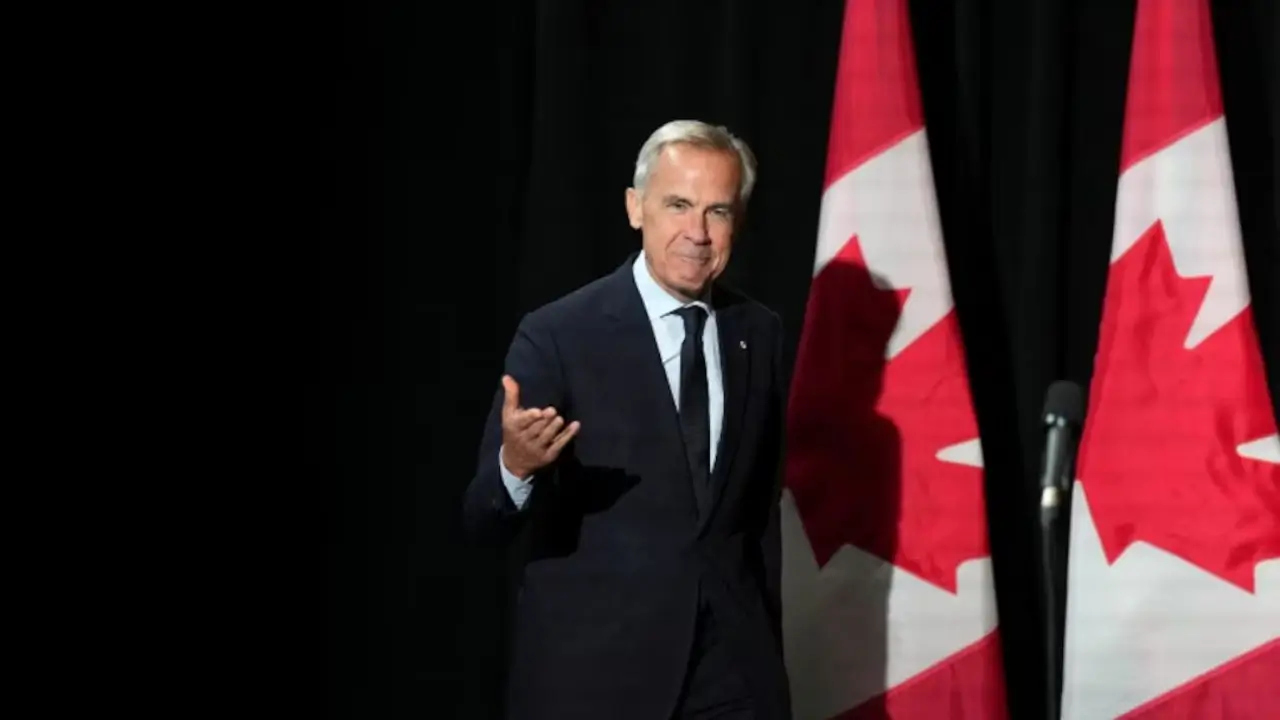
The relationship between Mark Carney European Union has quickly become one of the most closely watched elements of Canada’s foreign and economic policy. Since becoming prime minister, Carney has pushed for stronger ties with European countries while Canada faces growing uncertainty in its relationship with the United States. His approach is not simply about finding new buyers for Canadian products. It represents a broader attempt to build stronger economic, technological, defence, and diplomatic connections with Europe.
Canada and the EU already have a substantial relationship through the Comprehensive Economic and Trade Agreement, commonly known as CETA. But Carney’s government has been looking beyond the existing framework. Canada has joined the EU’s Security Action for Europe initiative, expanded cooperation on critical minerals and technology, and worked toward deeper coordination on defence and economic security.
The discussion has become even more significant in September 2026. Reports have suggested that Canada is exploring an unusually close form of association with the EU, although Carney has made clear that Canada is not seeking EU membership. Instead, he has described the goal as a distinctive partnership based on shared interests, complementary economies, and common democratic values.
That distinction matters. Canada is geographically distant from Europe and remains a sovereign country with its own institutions, currency, trade arrangements, and foreign policy. Yet the current push could produce a relationship far deeper than a traditional free-trade partnership.
Mark Carney’s European Strategy and the Changing Global Landscape
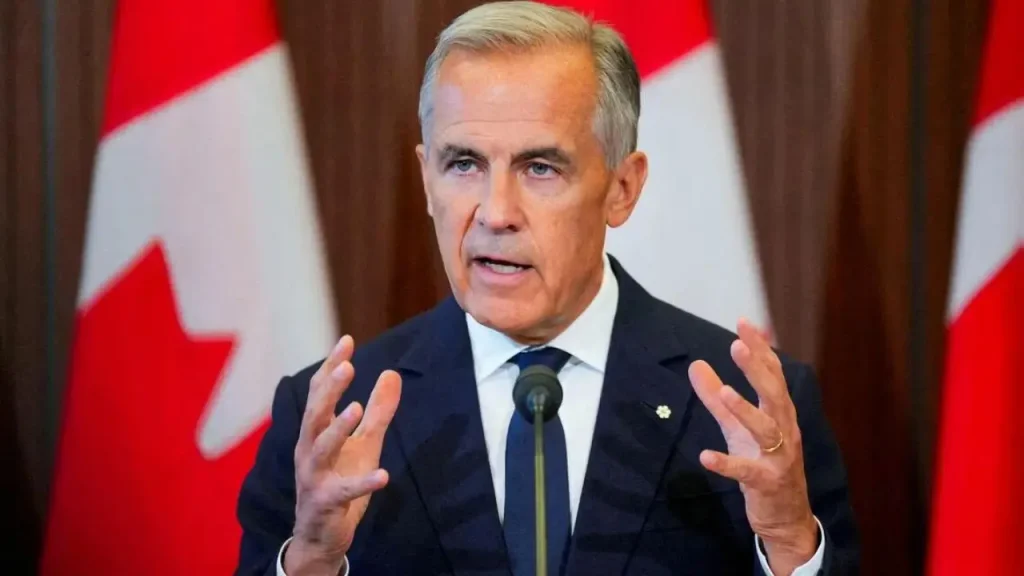
Mark Carney’s interest in Europe has developed against a major shift in Canada’s international economic environment. For decades, the United States has dominated Canada’s trade relationships. That dependence created enormous economic advantages because the two countries share a long border and deeply integrated supply chains. At the same time, it left Canada particularly vulnerable whenever Washington changed tariffs, procurement rules, or broader trade policy.
The trade tensions that intensified during 2026 have encouraged Ottawa to rethink that dependence. The United States remains Canada’s overwhelmingly important trading partner, but Carney has increasingly argued that Canada needs more diversified relationships. European markets therefore offer something valuable: a large group of wealthy economies with sophisticated industries, substantial consumer markets, and an interest in stable international trade. Recent U.S. restrictions and Canadian retaliatory measures have made diversification more urgent.
Carney’s European strategy is also influenced by security concerns. Europe is dealing with a changing defence environment, pressure to strengthen domestic military capabilities, and growing concern about supply-chain resilience. Canada has significant natural resources, advanced research capabilities, energy potential, and a capable defence industry. Europe, meanwhile, has a huge market, industrial expertise, financial resources, and an expanding need for secure sources of strategic materials.
This creates a natural basis for cooperation. Rather than viewing Europe purely as a destination for Canadian exports, Carney’s government is attempting to establish Canada as a strategic partner. That explains why discussions increasingly cover defence, artificial intelligence, critical minerals, energy, digital infrastructure, and secure supply chains alongside conventional trade. In May 2026, Carney met European Council President António Costa and European Commission President Ursula von der Leyen and highlighted precisely these areas of cooperation.
Why Europe Matters More to Canada
Europe also provides Canada with an opportunity to strengthen relationships with countries that broadly share its political values. Canada and European states cooperate closely through NATO, the G7, multilateral institutions, climate initiatives, scientific research, and international diplomacy.
Carney’s approach is therefore larger than a commercial calculation. A stronger Canada-Europe relationship could give Ottawa additional diplomatic room to manoeuvre when dealing with major powers. It could also allow Canada and European countries to coordinate more effectively on issues such as Arctic security, critical infrastructure, cybersecurity, artificial intelligence, and economic resilience.
CETA Provides the Foundation for a Deeper Canada-EU Relationship
The strongest existing pillar of the Canada-EU relationship is CETA. The agreement has been provisionally applied since 2017 and provides Canadian companies with preferential access to the European market. It has reduced many tariffs and created a more predictable environment for businesses operating between Canada and Europe. According to the European Commission, trade between Canada and the EU has grown substantially since CETA began provisional application.
| Element | Details |
|---|---|
| SEO Title | Mark Carney European Union: Canada’s New Strategic Partnership With Europe |
| Meta Title | Mark Carney European Union: Canada’s Growing European Alliance |
| Meta Description | Mark Carney European Union ties are expanding as Canada seeks deeper trade, security, technology, and economic cooperation with Europe. |
| Slug | mark-carney-european-union |
| Category | News |
| Focus Keyword | mark carney european union |
CETA is particularly important because Carney’s European ambitions are not starting from zero. Canada already has an established institutional relationship with the EU, including regular committees and mechanisms for discussing regulatory cooperation. In March 2026, Canadian and European officials formally launched negotiations for a Canada-EU Digital Trade Agreement, showing that the relationship is moving into newer areas of economic activity.
Digital trade could become increasingly important as economies become more dependent on cloud computing, artificial intelligence, digital services, data infrastructure, and cross-border technology. A modernized economic relationship would need to address issues that were far less significant when CETA was originally negotiated.
CETA’s Remaining Challenge
There is, however, an important limitation. CETA has not yet been fully ratified by every EU member state. Until that process is complete, the agreement remains provisionally applied. That makes CETA both a success story and a reminder of how difficult EU-wide agreements can be.
For Carney, this creates an interesting political challenge. It is relatively easy to announce ambitious cooperation between governments. Turning those announcements into permanent legal arrangements requires agreement across European institutions and individual member states.
Ireland provides one example of progress. During Carney’s June 2026 visit, Canadian and Irish leaders discussed CETA and welcomed progress toward Ireland’s full ratification.
The lesson is clear: Canada’s European strategy may have considerable potential, but implementation will require patience and sustained diplomacy.
Defence, Critical Minerals and Technology Are Transforming the Partnership
Trade is only one part of the emerging relationship. Defence cooperation has become equally important. In 2025, Canada and the EU signed a Security and Defence Partnership, creating a framework for closer cooperation as Europe strengthens its defence capabilities. Canada subsequently became the first non-European country to participate in the EU’s Security Action for Europe, known as SAFE.
This is strategically significant because Canada’s relationship with Europe has historically been discussed mainly through NATO. The new arrangements add another layer. Canada can contribute industrial capacity, defence expertise, technology, and resources, while European countries can provide investment opportunities and access to a major defence market.
The critical-minerals relationship is equally important. Modern industries rely heavily on minerals needed for batteries, electronics, renewable-energy technologies, defence equipment, and advanced manufacturing. Canada possesses substantial natural resources, making it an attractive partner for European countries attempting to reduce vulnerabilities in strategic supply chains.
Carney has repeatedly highlighted Canada’s advantages in critical minerals, energy, and technology during meetings with European leaders. In June, Canadian and European leaders discussed expanding cooperation in these areas while also working on conservation and security.
Artificial Intelligence and Advanced Technology
Technology could become another major pillar. Canada has developed a strong reputation in artificial intelligence research, while Europe has a huge consumer and industrial market. Combining Canadian research and innovation with European investment and commercial opportunities could create new partnerships in AI, quantum technology, telecommunications, cybersecurity, and digital infrastructure.
This is particularly relevant because Canada wants to attract investment while Europe wants reliable technological partners. Cooperation can therefore work in both directions. Canadian companies can gain access to European markets, while European companies can gain access to Canadian resources, research networks, energy, and North American investment opportunities.
The relationship could eventually extend to major infrastructure projects, including data centres, digital networks, and undersea communications infrastructure. Such projects would have economic value but also strategic importance because resilient digital infrastructure has become a national-security issue.
What “Associate” Relationship With the EU Could Mean
One of the most intriguing developments surrounding Mark Carney European Union is the recent discussion of an exceptionally close relationship sometimes described as an “associate member” model. Reports have suggested that Canada is exploring a framework that could bring it substantially closer to the European economic and strategic system without making it an EU member.
Carney has subsequently clarified that Canada is not pursuing EU membership. Instead, he has spoken of a “unique alliance” with Europe based on shared values and complementary strengths. That distinction is critical because EU membership would involve profound political and institutional commitments that Canada has neither requested nor realistically positioned itself to undertake.
An exceptionally close partnership could theoretically involve cooperation across several fields. These might include trade, investment, defence procurement, scientific research, digital technology, education, energy, critical minerals, and movement between Canada and European countries.
Some proposals discussed publicly have included easier travel and mobility arrangements, stronger participation in European research and educational initiatives, and greater integration of supply chains. Such measures would not automatically make Canada part of the EU. Instead, they could create a specialized relationship designed around Canada’s particular position as a non-European country.
Why the Idea Is Difficult
The biggest obstacle is that the European Union is not simply a collection of individual countries that can create any arrangement they want. Many areas of EU policy involve common rules, shared institutions, and approval processes involving member states.
Any new Canada-EU arrangement would therefore require substantial negotiation. European governments would have to decide what benefits they would receive in return for offering Canada deeper access or participation. Questions about regulations, labour mobility, market access, sovereignty, and legal enforcement would all become important.
There is also the question of precedent. If Canada received a highly customized relationship with the EU, other countries might seek similar arrangements. European governments would need to determine whether such a model strengthens the Union or makes its external relationships more complicated.
The Economic and Political Opportunities for Canada
For Canada, a stronger European relationship could reduce some of the risks created by excessive dependence on one market. Diversification does not mean replacing the United States. Canada’s geography and existing economic integration with the American economy make that unrealistic. Instead, diversification means giving Canadian businesses more alternatives.
European demand could be particularly valuable in sectors where Canada has natural advantages. Energy, agriculture, aerospace, advanced manufacturing, financial services, clean technology, critical minerals, artificial intelligence, and defence are all areas where deeper connections could produce meaningful opportunities.
A stronger relationship could also encourage European investment in Canada. This matters because investment can create jobs, expand industrial capacity, and help Canada develop domestic processing capabilities rather than simply exporting raw materials.
The strategic value may be even greater. If Canada becomes a more important economic and security partner for Europe, Ottawa gains another platform for influencing international discussions. Canada would remain closely connected to the United States while simultaneously strengthening its relationships across the Atlantic.
Benefits for Europe
Europe also has reasons to take Canada seriously. Canada offers access to natural resources, energy, food, advanced technology, a highly educated workforce, and a stable political environment. It is also a G7 country with a large Arctic territory and an important role in NATO.
For European governments concerned about economic security, Canada can be an attractive partner because it is politically aligned with many European democracies and has substantial resources that Europe needs.
The partnership also has symbolic value. Canada can help Europe strengthen ties across the Atlantic at a time when traditional assumptions about transatlantic relations are being tested. A stronger Canada-Europe connection could contribute to a broader network of middle powers seeking greater strategic independence while maintaining alliances.
The Challenges That Could Limit Carney’s European Vision
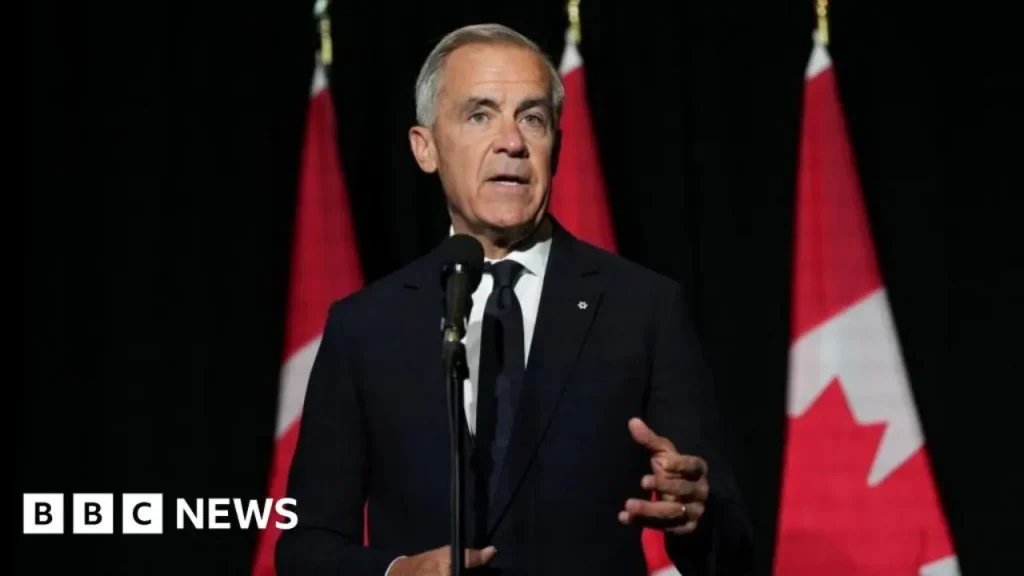
Despite the enthusiasm surrounding closer Canada-EU relations, there are serious obstacles. The first is scale. Even an exceptionally strong European partnership cannot quickly replace Canada’s enormous economic relationship with the United States.
Canadian companies are deeply integrated into North American supply chains. Automobiles, energy, agriculture, manufacturing, financial services, and countless other industries depend heavily on cross-border commerce. Building alternative markets takes years, not months.
There is also a practical difference between announcing cooperation and achieving regulatory integration. European and Canadian rules can differ significantly, and businesses may still face costs even when tariffs are low. Regulatory alignment, professional qualifications, data rules, food standards, investment regulations, and procurement policies can all affect how easily companies operate across borders.
Another challenge is European politics. The EU contains many governments with different economic priorities and domestic political pressures. A proposal that looks attractive in Brussels may face questions in national capitals. The incomplete ratification of CETA demonstrates how complicated that process can be.
The Question of Sovereignty
Carney must also manage the domestic political dimension. Canadians may support closer European relationships while remaining cautious about arrangements that could limit Canada’s ability to set its own policies.
That is why the distinction between partnership and membership is so significant. A customized alliance can potentially provide substantial economic and strategic benefits without requiring Canada to surrender decision-making authority to European institutions.
Carney’s language around sovereignty suggests that this balance will remain central to his approach. The objective is not to turn Canada into a European country. It is to make Canada a stronger North American country with a much deeper European partnership.
Conclusion
The story of Mark Carney and the European Union is ultimately about much more than trade. It reflects a fundamental shift in how Canada is thinking about its place in an increasingly uncertain international system.
Carney’s government has already moved beyond traditional Canada-EU cooperation by expanding collaboration in defence, critical minerals, energy, technology, digital trade, and economic security. Canada’s participation in the EU’s SAFE initiative and its increasingly prominent role in European political forums demonstrate how quickly the relationship has developed.
The next stage could be even more ambitious. Carney is scheduled to address the European Parliament in Strasbourg and attend European Commission President Ursula von der Leyen’s State of the Union address in September 2026, highlighting the political importance Ottawa now places on its European relationships.
Canada is not seeking EU membership, but it is clearly interested in a relationship that goes well beyond conventional diplomacy. If Ottawa and Brussels can overcome regulatory, political, and institutional obstacles, Canada could emerge as one of Europe’s closest non-European partners.
For Carney, the European strategy is also a statement about Canada’s future. Rather than choosing between North America and Europe, his government is attempting to strengthen Canada’s position in both. The success of that strategy will depend not on dramatic announcements alone, but on whether today’s agreements can eventually become durable trade, investment, security, technology, and people-to-people connections.
Frequently Asked Questions
1. What is Mark Carney’s position on the European Union?
Mark Carney supports a much closer strategic and economic relationship between Canada and the European Union. He has made clear that Canada is not seeking EU membership, but he wants a distinctive partnership that expands cooperation in areas such as trade, defence, technology, energy, and critical minerals.
2. Is Canada trying to become a member of the European Union?
No. Carney has explicitly rejected the idea that Canada is seeking EU membership. The current discussion is focused on creating a deeper partnership while Canada remains an independent, sovereign country.
3. What is CETA?
CETA stands for the Comprehensive Economic and Trade Agreement between Canada and the European Union. It provides preferential market access and reduces many trade barriers between Canada and EU countries. The agreement has been provisionally applied since 2017 but still requires full ratification by all EU member states.
4. Why does Mark Carney want stronger ties with Europe?
A major reason is economic diversification. Canada has traditionally depended heavily on the United States for trade. Stronger European relationships could provide Canadian businesses with additional markets and investment opportunities while also strengthening Canada’s diplomatic and strategic position.
5. What areas are Canada and the EU cooperating on?
The relationship includes trade, defence, critical minerals, energy, artificial intelligence, digital technology, secure supply chains, climate-related cooperation, and economic security. Both sides have been expanding the partnership beyond traditional commercial issues.
6. What is the EU’s SAFE initiative?
SAFE, or Security Action for Europe, is an EU defence initiative designed to support joint defence procurement and strengthen European defence capabilities. Canada became the first non-European country to participate in the initiative, giving its defence sector a new avenue for cooperation with European partners.
7. Could Canada receive special status from the EU?
There has been recent discussion about creating an unusually close or associate-style relationship between Canada and the EU. However, no standard EU membership arrangement has been established for Canada, and Carney has described the objective as a unique alliance rather than membership.
8. Why are critical minerals important in Canada-EU relations?
Critical minerals are essential for batteries, electronics, clean-energy technologies, advanced manufacturing, and defence equipment. Canada has significant mineral resources, while European countries want reliable supply chains. This creates strong economic and strategic incentives for cooperation.
9. Can Europe replace the United States as Canada’s main trading partner?
Not quickly. Canada’s economy is deeply integrated with the United States because of geography and decades of cross-border investment and supply-chain development. European diversification can reduce Canada’s dependence on one market, but it is unlikely to replace the United States in the near future.
10. What happens next for Mark Carney and the EU?
The relationship is likely to focus on turning existing commitments into practical agreements. Carney’s September 2026 European visit, including his planned address to the European Parliament, is expected to provide another opportunity to discuss trade, investment, security, and Canada’s broader strategic relationship with Europe.
