


Introduction
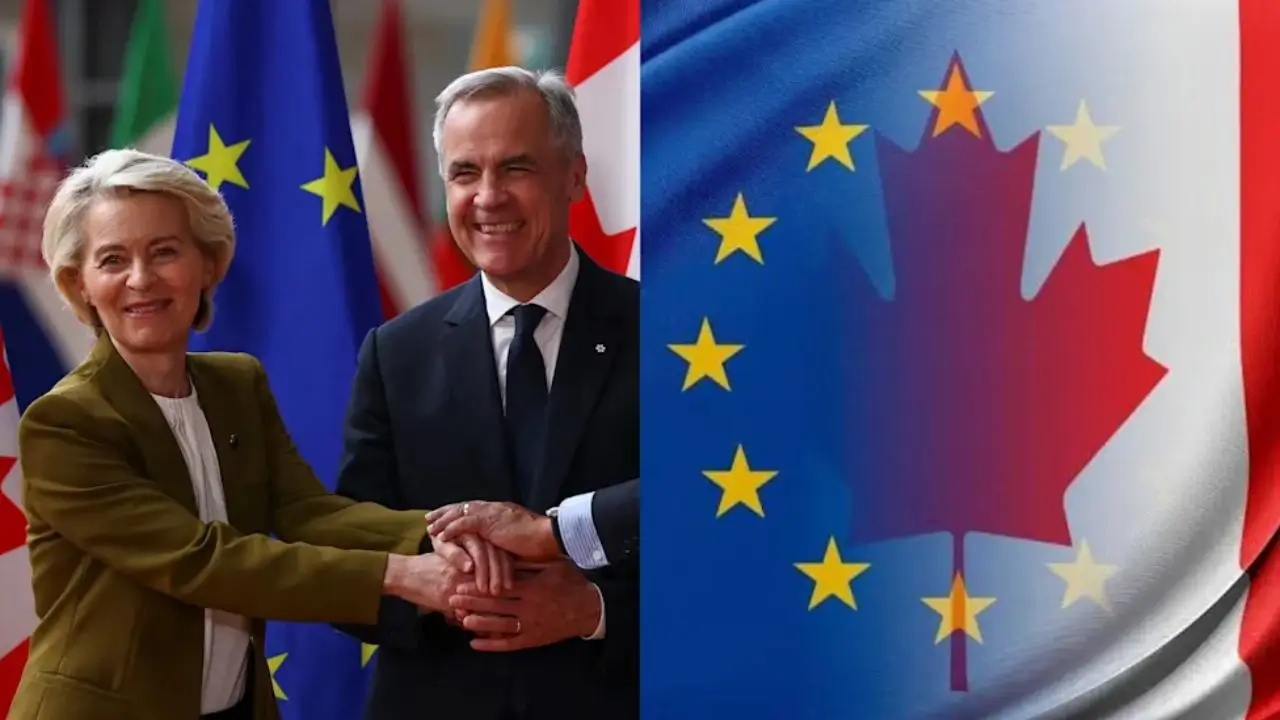
Canada EU relations have entered a period of renewed importance as both sides respond to changing global trade patterns, geopolitical tensions, supply-chain concerns and rapid technological change. Canada and the European Union have maintained formal relations for decades, but the partnership has gained new strategic weight as governments on both sides look for dependable economic and security partners.
The relationship is much broader than a conventional trade arrangement. Canada and the EU cooperate on foreign policy, defence, climate and energy, critical raw materials, digital technology, research, public health and international security. Their modern institutional relationship rests heavily on two major agreements: the Strategic Partnership Agreement, which provides a framework for political and foreign-policy cooperation, and the Comprehensive Economic and Trade Agreement, commonly known as CETA, which governs much of their economic relationship. Canada describes the EU as a strategic partner, while the EU identifies Canada as one of its closest partners outside Europe.
The direction of the relationship became especially clear at the 20th EU-Canada Summit in Brussels on June 23, 2025. Leaders agreed to deepen cooperation and signed a new Security and Defence Partnership covering areas ranging from crisis management and military mobility to cyber issues, hybrid threats, space security and emerging technologies.
By 2026, the economic side of the relationship was also expanding into new territory. The EU and Canada launched negotiations for a Digital Trade Agreement designed to complement CETA and address the needs of an increasingly digital economy. That development shows how the partnership is moving beyond traditional tariffs and physical goods toward data, technology, digital services and modern economic rules.
1. The Foundations of Canada EU Relations

Canada and the European Union have a relationship that predates many of the institutions that define modern international trade. Canadian government records describe the EU relationship as dating back to 1959, when Canada and the European Community’s predecessor arrangements began creating a formal basis for cooperation. Since then, the partnership has developed through a series of agreements and regular political dialogue.
A central feature of the relationship is the Strategic Partnership Agreement, or SPA. The agreement provides a framework for cooperation on foreign policy, security, sustainable development, climate change, clean energy, digital transitions and public health. It also establishes mechanisms for regular discussions between Canadian and European officials. Rather than treating individual issues separately, the SPA allows Canada and the EU to discuss a broad range of international and domestic policy challenges within one institutional relationship.
The second major pillar is CETA. Signed in 2016 and provisionally applied from September 21, 2017, CETA significantly reduced trade barriers between Canada and the EU. Most economically significant elements of the agreement are already being applied, although full implementation requires completion of ratification by all EU member states.
This structure matters because Canada and the EU are not simply negotiating individual trade deals whenever a new issue appears. They already have a framework capable of supporting long-term cooperation. New initiatives, including digital trade and defence cooperation, can therefore build on an established institutional foundation rather than starting from scratch.
Why the relationship has strategic value
Canada brings substantial natural resources, agricultural capacity, energy expertise, advanced industries and access to North American markets. The EU, meanwhile, represents one of the world’s largest integrated economic markets and has considerable industrial, technological and regulatory influence.
The relationship also has a strong people-to-people dimension. Canadians have longstanding cultural, educational, family and professional connections with European countries, while European businesses and institutions maintain extensive links with Canadian counterparts. These connections give the partnership a depth that cannot be measured only by annual trade figures.
2. CETA and the Growing Canada-EU Trade Relationship
Trade is one of the most visible parts of Canada EU relations. CETA removed or reduced many tariffs and created wider market-access opportunities for companies on both sides. According to the European Commission, 99% of tariff lines had been abolished by 2024, while bilateral trade in goods and services reached €130 billion in 2025, compared with €72.1 billion in 2016 before CETA was provisionally applied.
The growth has not been limited to merchandise. Services have become increasingly important, including professional services, financial activities, transportation, telecommunications and other areas connected to modern economies. European companies can access opportunities in Canada, while Canadian businesses gain preferential access to the large EU market.
CETA also created structures for cooperation beyond simple tariff reduction. The agreement includes committees and specialized dialogues dealing with agriculture, financial services, government procurement, customs, pharmaceuticals, professional qualifications, regulatory cooperation and other areas. These mechanisms give officials and industry representatives opportunities to discuss practical barriers that can remain even after tariffs have been reduced.
For consumers and companies, this distinction is significant. A trade agreement does not automatically mean that every product can enter another market without conditions. Businesses still need to meet applicable standards, labeling rules, customs requirements and other regulations. CETA can make the commercial environment easier, but it does not remove every regulatory obligation.
The unfinished ratification process
One of the most frequently misunderstood aspects of CETA is its legal status. The agreement has been provisionally applied since 2017, but it has not yet entered into full effect because ratification by all EU member states has not been completed.
As of the latest European Commission information available in 2026, 17 EU member states had completed their national ratification processes, while 10 still needed to do so: Belgium, Bulgaria, Cyprus, France, Greece, Hungary, Ireland, Italy, Poland and Slovenia.
This does not mean that Canada and European businesses are operating without CETA. Much of the agreement is already being applied. Instead, the distinction concerns provisions that require full ratification before they can take effect.
The ratification issue remains part of the broader Canada-EU agenda. At the 2025 summit, leaders reaffirmed their intention to work toward full ratification and implementation of CETA.
3. Canada EU Security and Defence Cooperation
Security has become an increasingly important part of the Canada EU relationship. The 2025 summit marked a major development when Canada and the EU signed a Security and Defence Partnership. The agreement covers a wide range of subjects, including crisis management, military mobility, maritime security, cyber issues, hybrid threats, space security, emerging technologies, peace mediation and economic security.
The agreement reflects a broader understanding of modern security. Traditional military defence remains important, but governments now also have to consider cyberattacks, attacks on critical infrastructure, disinformation and other hybrid threats, vulnerabilities in supply chains and risks surrounding emerging technologies.
| Item | Details |
|---|---|
| Focus Keyword | Canada EU |
| SEO Title | Canada EU: Trade, Security, Cooperation and the Future of a Strategic Partnership |
| Meta Title | Canada EU Relations: Trade, Security and Future Cooperation |
| Meta Description | Canada EU relations cover trade, CETA, defence, digital policy, energy and critical minerals. |
| Slug | canada-eu |
| Category | News |
| Article Type | International Relations / Current Affairs |
| Main Topics | Canada-EU relations, CETA, trade, defence, digital trade, critical minerals, energy |
| FAQs | 10 |
Canada’s position is also distinctive because it is a NATO member while maintaining a separate strategic relationship with the EU. For EU member states that are also NATO allies, NATO remains central to collective defence. The Canada-EU partnership can therefore complement rather than replace existing security structures.
The two sides have also moved toward closer cooperation in defence procurement. In December 2025, EU member-state representatives endorsed an agreement concerning Canadian participation in the EU’s Security Action for Europe, or SAFE, instrument. The Council of the EU described Canada as the first non-European country to participate in SAFE.
Why defence cooperation matters economically
Defence cooperation is not only about military strategy. It can also affect industrial policy, technology development, manufacturing and research.
Joint projects can create opportunities for companies involved in aerospace, communications, cybersecurity, surveillance technologies, advanced manufacturing and other sectors. At the same time, deeper defence-industrial links can help governments build more resilient supply chains and reduce dependence on vulnerable sources for strategically important equipment.
The 2025 summit specifically connected defence cooperation with economic security, critical infrastructure, emerging technologies and resilience.
4. Digital Trade, Technology and Critical Minerals
One of the most significant developments in Canada EU relations in 2026 has been the launch of negotiations for a Digital Trade Agreement. The negotiations formally began in March 2026 and are intended to complement CETA with rules better suited to the digital economy. By August 2026, four rounds of negotiations had been recorded, with rounds taking place in April, June, July and August.
Digital commerce raises questions that traditional trade agreements were not designed to address in the same way. Businesses increasingly depend on electronic transactions, digital services, cloud technologies, data flows, cybersecurity and online consumer protection.
A dedicated digital agreement could therefore provide greater legal certainty for businesses operating across the Atlantic. The European Commission says the proposed framework is intended to strengthen consumer protection in digital transactions while supporting an open and fair online environment.
The digital relationship also intersects with artificial intelligence, cybersecurity and quantum technologies. Canada and the EU have already identified these areas as potential fields of cooperation, making technology an increasingly important part of the wider partnership.
Critical minerals and resilient supply chains
Critical minerals are another major area of shared interest. Modern economies rely on materials such as lithium, nickel, cobalt and other minerals for batteries, electronics, renewable-energy technologies and advanced manufacturing.
Canada has significant natural-resource capabilities, while European economies have major industrial and manufacturing demand. This creates an obvious basis for cooperation, although resource partnerships involve more than simply increasing exports.
The two sides have discussed ways to facilitate investment, expertise and more reliable supply chains for raw materials. At the 2025 summit, leaders also highlighted critical raw materials and economic resilience as important areas for cooperation.
For Canada, closer links with Europe can contribute to market diversification. For the EU, stronger relationships with reliable resource suppliers can support industrial resilience. The result is a partnership where trade, technology, energy and security increasingly overlap.
5. Climate, Energy and the Future of Canada EU Cooperation
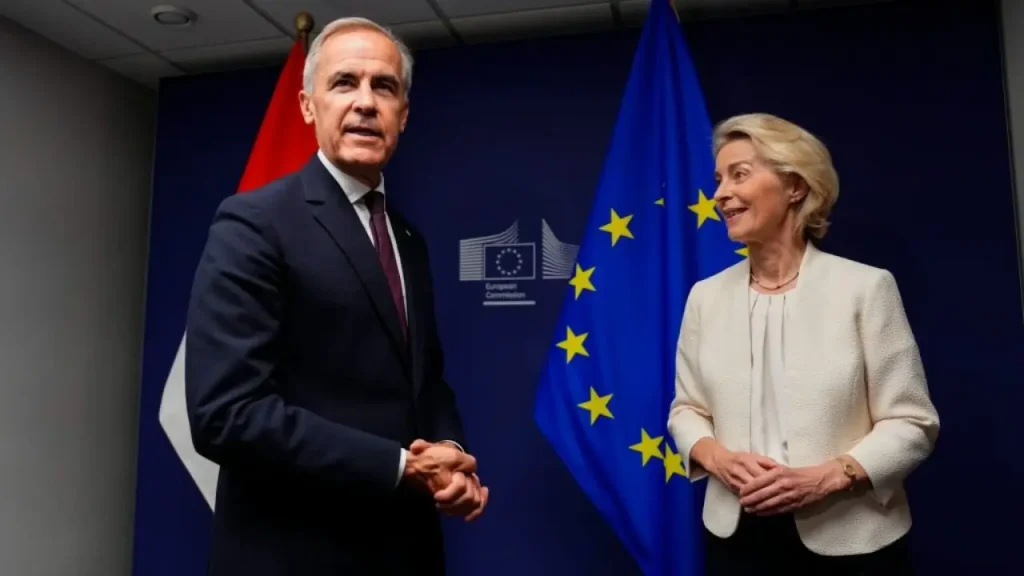
Climate and energy policy represent another major dimension of Canada EU relations. Both sides have interests in clean technology, energy security, sustainable development and reducing vulnerabilities in energy and industrial supply chains.
The Strategic Partnership Agreement already provides a framework for cooperation on climate change, environment and clean energy. The 2025 summit expanded the broader agenda to include climate action and energy alongside competitiveness, resilience and economic security.
The energy relationship is particularly relevant because global energy markets can be affected by geopolitical instability, infrastructure constraints and sudden changes in supply. Canada has the potential to contribute resources and expertise, while European countries possess significant industrial capabilities in clean technologies and energy systems.
However, energy cooperation is not simply a matter of increasing exports. Projects have to consider infrastructure, environmental requirements, investment conditions, transportation and long-term market demand. Successful cooperation therefore depends on coordination across governments and the private sector.
What the next phase could look like
The future Canada EU relationship is likely to be shaped by several connected priorities rather than one single agreement. CETA remains the foundation of the commercial relationship, while the Digital Trade Agreement could add rules for a more technology-driven economy. Defence cooperation is becoming more structured, and critical minerals are increasingly tied to industrial and economic security.
The March 2026 Canada-EU trade discussions also identified areas including digital transformation, critical raw materials, energy, forestry, defence procurement, clean technology and sustainable development as priorities for future cooperation.
That combination gives the relationship a broader character than a traditional free-trade partnership. Canada and the EU are increasingly discussing how to make their economies more resilient while maintaining open trade and cooperation.
There will still be disagreements and practical challenges. European and Canadian regulations are not identical, domestic political priorities can differ, and CETA’s incomplete ratification demonstrates how complex multinational agreements can be. The digital negotiations will also require difficult discussions over data, regulation, consumer rights and technology policy.
Yet the institutional foundation is strong. The partnership has established agreements, regular summits, specialized committees and a growing range of sector-specific dialogues. That makes it possible for Canada and the EU to address new challenges without rebuilding their relationship from the beginning.
Conclusion
Canada EU relations have developed into a broad strategic partnership covering far more than conventional trade. CETA remains the central economic framework, and its provisional application has been associated with substantial growth in bilateral commerce. At the same time, the relationship is expanding into defence, critical minerals, digital trade, clean technology, energy and supply-chain resilience.
The 2025 Security and Defence Partnership demonstrated that Canada and the EU increasingly view their security interests as interconnected. The launch of Digital Trade Agreement negotiations in 2026 shows a similar willingness to modernize the economic relationship as technology changes the way businesses operate.
For businesses, policymakers and citizens, the most important feature of the Canada-EU relationship may be its breadth. Trade, security, technology, energy and environmental policy are no longer isolated subjects. They influence one another, and cooperation in one area can strengthen opportunities in another.
The partnership will continue to face negotiations, regulatory differences and domestic political considerations on both sides. But its existing institutional structure provides a foundation for continued cooperation. As Canada and the European Union navigate a more competitive global economy, their relationship is likely to remain an important channel for trade, investment, security cooperation and shared policy initiatives.
10 Frequently Asked Questions About Canada EU
1. What is the Canada EU relationship?
The Canada EU relationship is a broad strategic partnership covering trade, investment, foreign policy, security, climate, energy, technology, development and other areas. It is supported by agreements including the Strategic Partnership Agreement and CETA.
2. What is CETA?
CETA stands for the Comprehensive Economic and Trade Agreement between Canada and the European Union and its member states. It was signed in 2016 and has been provisionally applied since September 21, 2017.
3. Is CETA fully ratified?
No. CETA is provisionally applied, but full entry into force requires completion of ratification procedures in all EU member states. As of the latest European Commission information in 2026, 17 member states had completed their national ratification processes and 10 remained.
4. How much does Canada trade with the EU?
The Canada-EU trade relationship is substantial. According to the European Commission, bilateral trade in goods and services reached €130 billion in 2025, compared with €72.1 billion in 2016.
5. Is Canada part of the European Union?
No. Canada is an independent country in North America and is not an EU member state. The relationship is based on international agreements and strategic cooperation between Canada and the EU.
6. What happened at the 2025 Canada-EU summit?
At the 20th EU-Canada Summit in Brussels on June 23, 2025, leaders agreed to deepen cooperation across trade, security, defence, digital policy, economic security and other areas. Canada and the EU also signed a Security and Defence Partnership.
7. What is the Canada-EU Digital Trade Agreement?
The Digital Trade Agreement is a new negotiation intended to complement CETA and establish modern rules for digital trade. Negotiations were launched in March 2026, with subsequent rounds recorded during the year.
8. Why are Canada and the EU interested in critical minerals?
Critical minerals are essential for areas such as batteries, electronics, clean technologies and advanced manufacturing. Canada has important natural-resource capabilities, while the EU has substantial industrial demand, creating opportunities for closer supply-chain cooperation.
9. Do Canada and the EU cooperate on defence?
Yes. Their cooperation expanded significantly with the Security and Defence Partnership signed in June 2025. Areas include crisis management, military mobility, maritime security, cyber issues, hybrid threats, space security and emerging technologies.
10. What is the future of Canada EU relations?
The relationship is expected to continue developing across trade, digital technology, defence, critical minerals, clean technology, energy and economic security. The ongoing CETA ratification process and Digital Trade Agreement negotiations are two important parts of that development.
