


Introduction
The Democratic Republic of the Congo (DRC) is a country of extraordinary scale and striking contrasts. Stretching across the heart of Central Africa, it contains immense tropical forests, major rivers, mineral-rich landscapes, fertile agricultural areas, rapidly growing cities, and communities representing hundreds of ethnic and cultural traditions. Its geography alone makes it one of Africa’s most significant countries, but its historical experiences have given it an importance that extends far beyond its borders.
The country has also experienced some of the most difficult chapters in modern African history. Colonial exploitation, political upheaval, dictatorship, wars, displacement, and continuing insecurity have shaped the lives of generations. Yet reducing the DRC to conflict would miss much of the country’s reality. Millions of Congolese people continue to build businesses, attend schools, create music and art, farm their land, develop new technologies, and strengthen communities despite enormous challenges.
Understanding the Democratic Republic of the Congo requires looking at several dimensions at once: its complicated history, remarkable geography, cultural diversity, natural wealth, economic potential, environmental importance, and the aspirations of its population. Together, these elements reveal a country whose challenges are substantial but whose possibilities are equally remarkable.
1. Geography and the Remarkable Landscape of the Democratic Republic of the Congo
The Democratic Republic of the Congo occupies a huge portion of Central Africa and is the second-largest country in Africa by land area, after Algeria. Its territory extends from the Atlantic Ocean in the west toward the Great Lakes region in the east and reaches northward into the vast forests of the Congo Basin. Because of its size, the country contains several distinct geographical zones rather than one uniform landscape.
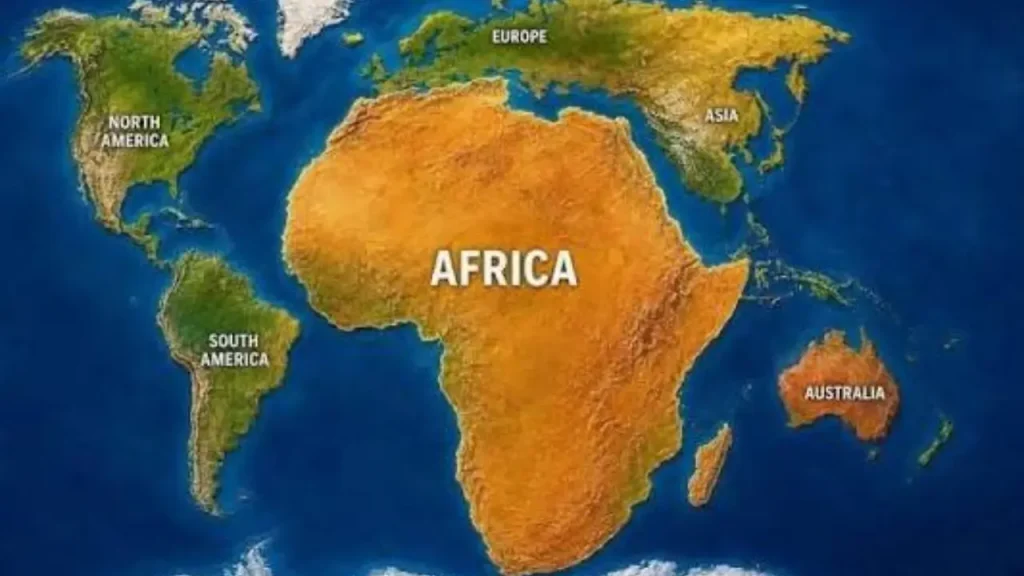
At the center lies the Congo Basin, one of the world’s most important tropical forest regions. The forests are part of an enormous ecological system shared by several Central African countries and provide habitat for an extraordinary range of wildlife. The Congo River is equally significant. It is one of the world’s great rivers by volume and forms an important natural and economic feature of the country. Its extensive network of tributaries connects distant areas and has historically influenced settlement, trade, agriculture, and transportation.
The country’s eastern landscape is dramatically different. The region around North Kivu, South Kivu, and Ituri includes mountains, highlands, lakes, volcanoes, and densely populated valleys. Lake Kivu, shared by the DRC and Rwanda, is among the region’s most notable geographical features. The Virunga volcanic region is particularly remarkable, with volcanic mountains rising above landscapes that support both human communities and rare wildlife.
The DRC’s geography creates opportunities as well as difficulties. Its rivers provide enormous potential for hydroelectric power, while its forests contribute to climate regulation and biodiversity conservation. At the same time, the sheer size of the country makes transportation difficult. In some rural areas, roads and bridges remain limited, meaning that communities can be separated from major markets, hospitals, schools, and government services by considerable distances.
A Country of Extraordinary Biodiversity
The Democratic Republic of the Congo is one of the world’s most biologically significant countries. Its forests are home to species such as bonobos, okapis, forest elephants, and numerous birds, reptiles, amphibians, and insects. The country’s wildlife is not simply an attraction for scientists or visitors; it is part of a complex ecological system that supports forests, waterways, agriculture, and local livelihoods.
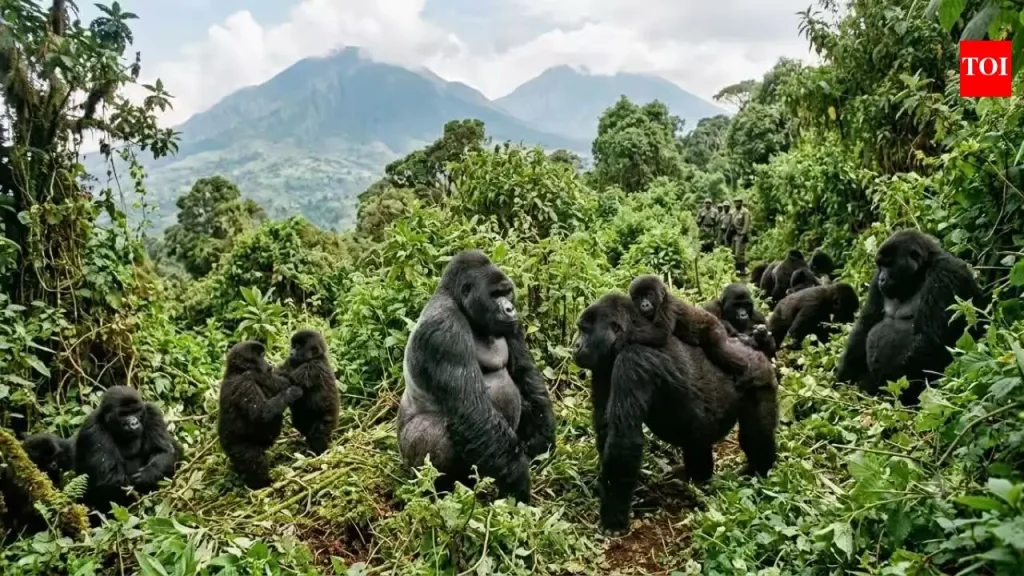
Virunga National Park is particularly famous for its biological importance. Located in the eastern part of the country, it includes forests, savannahs, mountains, and volcanic landscapes. It is also associated with the protection of mountain gorillas, one of the world’s most closely monitored endangered mammals. Conservation efforts in the DRC, however, face serious pressures from armed conflict, illegal resource extraction, habitat loss, and the needs of surrounding communities.
2. A Complex History Shaped by Colonialism, Independence, and Political Change
The history of the Democratic Republic of the Congo cannot be understood without examining the colonial period. In the late nineteenth century, the territory became the personal possession of King Leopold II of Belgium under the Congo Free State. The system became notorious for brutal forced labor and the extraction of valuable resources, particularly rubber. Local populations were subjected to severe abuses, and the period left a deeply painful historical legacy.
In 1908, the Belgian state formally took control of the territory, transforming the Congo Free State into the Belgian Congo. Although the administration changed, colonial rule continued to be structured around European political and economic interests. Infrastructure and certain institutions were developed, but the colonial system did not prepare the Congolese population for an easy transition to independent self-government. Political participation by Africans remained severely restricted for much of the colonial era.
| Category | Details |
|---|---|
| Country Name | Democratic Republic of the Congo (DRC) |
| Capital | Kinshasa |
| Continent | Africa |
| Region | Central Africa |
| Official Language | French |
| National Languages | Lingala, Swahili, Kikongo, Tshiluba |
| Currency | Congolese Franc (CDF) |
| Major River | Congo River |
| Major Natural Resources | Copper, cobalt, gold, diamonds, tin, tantalum |
| Major Economic Sectors | Mining, agriculture, forestry, energy, trade, manufacturing |
| Major Cities | Kinshasa, Lubumbashi, Mbuji-Mayi, Kisangani, Goma, Bukavu |
| Famous Wildlife | Bonobos, gorillas, chimpanzees, okapis, forest elephants |
| Major Ecosystem | Congo Basin Rainforest |
| Independence | June 30, 1960 |
| Historical Colonial Power | Belgium |
| Atlantic Access | Yes, through a small Atlantic coastline |
| Key Geographic Feature | Vast Congo Basin and Congo River system |
| Major Challenges | Conflict, poverty, infrastructure shortages, governance, environmental pressure |
| Major Future Opportunities | Mining, agriculture, hydro |
The country achieved independence from Belgium on June 30, 1960. Independence was followed almost immediately by political instability, including the Congo Crisis. Patrice Lumumba, the country’s first democratically elected prime minister, became one of the most important figures of the independence era. His political career was brief and ended with his assassination in 1961, an event that remains deeply significant in Congolese and African history.
The following decades were dominated by Joseph-Désiré Mobutu, who eventually established a highly centralized authoritarian system. The country was renamed Zaire in 1971, and Mobutu remained in power for decades. His government maintained close relationships with Western countries during the Cold War, but corruption, economic decline, and political repression increasingly weakened the state.
Wars and the Modern Political Landscape
The fall of Mobutu in 1997 followed the First Congo War and brought Laurent-Désiré Kabila to power. A second major conflict began in 1998 and eventually involved several African countries. The resulting wars caused enormous loss of life, displacement, economic disruption, and social trauma. Even after formal peace agreements, violence continued in parts of eastern Congo.
The DRC’s modern history is therefore not simply a sequence of political changes. It is a story of institutions struggling to function across an enormous territory while communities have faced armed groups, economic uncertainty, and political instability. At the same time, the country has held competitive elections and experienced peaceful transfers of power, developments that demonstrate the continuing importance of political participation and democratic institutions.
3. People, Languages, Culture, and Everyday Life
The Democratic Republic of the Congo is home to a remarkably diverse population. Hundreds of ethnic groups live across the country, each contributing traditions, languages, cuisines, music, clothing, stories, and forms of community life. This diversity makes it difficult to describe Congolese culture as a single experience. Cultural traditions vary substantially between regions, cities, rural communities, and ethnic groups.
French is the country’s official language and plays a major role in government, education, administration, and national communication. Several major African languages are also widely used. Lingala has a particularly strong presence in Kinshasa and other parts of the country, while Swahili is widely spoken in eastern regions. Kikongo and Tshiluba are also among the country’s major national languages.
Kinshasa, the capital, is one of Africa’s largest urban centers. Situated along the Congo River opposite Brazzaville, the city is a major center for politics, commerce, education, entertainment, and culture. Its enormous population gives it an energetic character, but the city also faces significant challenges involving transportation, housing, infrastructure, employment, and access to public services.
Outside the major cities, life can look very different. Agriculture remains essential to many households, particularly in rural areas. Farmers cultivate crops such as cassava, maize, bananas, rice, beans, and other food products. Fishing also supports communities near rivers and lakes. In many regions, however, limited infrastructure makes it difficult for farmers to transport products efficiently to larger markets.
The Global Influence of Congolese Music
Few aspects of Congolese culture have traveled as successfully around the world as its music. Congolese rumba became a defining musical tradition in Central Africa and later influenced musicians across the continent and beyond. Its combination of guitars, rhythm, dance, and expressive vocals created a distinctive sound that has evolved through multiple generations.
Artists from the DRC have also played an important role in modern African popular music. Music provides more than entertainment: it reflects social life, political concerns, romance, urban experiences, migration, and aspirations. Dance is similarly central to cultural expression, with Congolese performers developing styles that have influenced popular culture far outside Central Africa.
Art is another important part of Congolese identity. Painting, sculpture, fashion, photography, and contemporary visual arts provide ways for creators to explore both traditional themes and modern life. Congolese designers and artists increasingly connect local cultural influences with international creative movements, demonstrating that the country’s cultural identity is dynamic rather than frozen in the past.
4. Natural Resources, Economy, and the Importance of Minerals
The Democratic Republic of the Congo possesses some of the world’s most valuable mineral resources. Copper and cobalt are particularly important, especially in the country’s southeastern mining regions. Cobalt is a crucial component in many rechargeable batteries, making the DRC an important country in discussions about electric vehicles, energy storage, and the global transition toward lower-carbon technologies.
The country also has deposits of gold, diamonds, tin, tantalum, lithium, and other minerals. This extraordinary geological wealth has created enormous economic opportunities. Yet resource abundance has not automatically translated into widespread prosperity. Mining areas can experience environmental damage, labor concerns, weak infrastructure, and disputes over control of valuable resources.
The relationship between minerals and conflict is especially complicated in parts of eastern DRC. Certain armed groups have sought revenue through control of territory, mining areas, trade routes, or local economic activities. This does not mean that all mining in the country is connected to armed groups; the mining sector includes large industrial operations as well as extensive artisanal and small-scale mining. The challenge is building systems that allow natural wealth to support communities and national development while reducing exploitation and illegal trade.
Agriculture remains just as important for ordinary livelihoods. The DRC possesses substantial agricultural potential because of its fertile land, varied climate, and abundant water resources. Yet production is frequently constrained by poor roads, limited access to financing, insufficient storage facilities, insecurity in some areas, and weak connections between rural producers and urban markets.
Energy Potential
The country’s rivers also give it enormous energy potential. The Congo River system could support large-scale hydroelectric development, and the Inga project on the Congo River has long been discussed as one of Africa’s most significant potential sources of electricity.
Reliable electricity could transform economic life by supporting manufacturing, businesses, hospitals, schools, telecommunications, and households. However, developing major energy projects requires substantial investment, careful environmental planning, strong institutions, and attention to the communities living near project sites. Energy development is therefore not simply an engineering challenge; it is also an economic and social one.
5. Challenges, Conservation, and the Future of the Democratic Republic of the Congo
The DRC faces serious challenges, particularly in parts of the east. Armed groups have operated in the region for decades, contributing to insecurity, displacement, and humanitarian crises. Civilians can be affected by violence, loss of livelihoods, destruction of property, and disrupted access to education and healthcare. The situation is complicated by local disputes, regional politics, competition over resources, and the weakness of state institutions in some areas.
Despite these difficulties, the country should not be defined exclusively by conflict. Millions of Congolese people live ordinary lives and work to improve their communities. Entrepreneurs operate businesses, teachers educate children, health workers serve patients, farmers produce food, artists create new work, and young people increasingly participate in digital and creative industries. These everyday efforts rarely receive the same international attention as political crises, but they are essential to understanding the country’s future.
Environmental protection presents another major challenge. The Congo Basin forests store enormous quantities of carbon and provide habitats for globally important species. Deforestation can result from agricultural expansion, charcoal production, logging, mining, infrastructure development, and population pressures. Protecting forests requires more than simply restricting human activity. Communities need viable economic alternatives, secure land rights, access to energy, and opportunities to benefit from conservation.
Climate change adds another layer of complexity. Changes in rainfall patterns, temperatures, agricultural conditions, and extreme weather can affect food production and livelihoods. At the same time, the DRC’s forests make it highly relevant to global climate policy. Protecting these ecosystems could provide benefits far beyond the country’s borders, but international conservation efforts need to respect local communities and national sovereignty.
A Future Built Around Human Potential
The DRC’s greatest asset may ultimately be its people. Its youthful population represents a huge potential workforce and a source of creativity and entrepreneurship. If education, healthcare, infrastructure, electricity, security, and economic opportunity improve, the country could experience significant long-term transformation.
Technology may also play a growing role. Mobile phones and digital services can help connect people to financial services, information, markets, education, and communication. Digital development cannot solve problems such as armed conflict or weak infrastructure by itself, but it can help communities overcome some traditional barriers to participation in the economy.
For the DRC to realize its potential, progress will require strong institutions and sustained investment. Transparent management of natural resources, improved transportation, expanded electricity access, better schools and healthcare, responsible environmental policies, and durable peace would create conditions for broader prosperity. The country does not lack resources; the central question is how effectively those resources can be transformed into opportunities for its population.
Conclusion
The Democratic Republic of the Congo is a country that resists simple descriptions. It is simultaneously a nation with a difficult past, enormous natural wealth, extraordinary biodiversity, vibrant cultural traditions, major cities, vast rural communities, and a young population looking toward the future.
Its history explains many of the difficulties it faces today, while its geography and resources explain why the country matters so greatly to Africa and the wider world. The Congo Basin makes it environmentally significant, its minerals connect it to global industries, and its cultural influence—particularly through music and art—has traveled far beyond Central Africa.
The challenges are undeniable. Conflict, poverty, infrastructure shortages, governance difficulties, environmental pressures, and unequal access to opportunity remain serious obstacles. Yet the DRC also possesses the ingredients for remarkable progress. Its rivers, forests, farmland, minerals, cultural creativity, and human talent offer possibilities that few countries can match.
Understanding the Democratic Republic of the Congo therefore means looking beyond headlines. It means recognizing both the country’s hardships and its resilience. Its future will depend not only on the resources beneath its soil or the forests covering its landscape, but on whether its institutions and people can turn those extraordinary assets into lasting security, opportunity, and prosperity.
Frequently Asked Questions About the Democratic Republic of the Congo
1. Where is the Democratic Republic of the Congo located?
The Democratic Republic of the Congo is located in Central Africa. It shares borders with several countries, including Angola, Zambia, Tanzania, Burundi, Rwanda, Uganda, South Sudan, the Central African Republic, and the Republic of the Congo. It also has a small Atlantic coastline in the west.
2. What is the capital of the Democratic Republic of the Congo?
Kinshasa is the capital and largest city of the Democratic Republic of the Congo. It is located along the southern bank of the Congo River, directly opposite Brazzaville, the capital of the neighboring Republic of the Congo.
3. What language is spoken in the Democratic Republic of the Congo?
French is the official language. The country also has several widely spoken national languages, including Lingala, Swahili, Kikongo, and Tshiluba. Many communities also use local languages associated with their ethnic and regional identities.
4. Why is the Democratic Republic of the Congo important to the global economy?
The DRC is especially important because of its substantial mineral resources. It is a major source of cobalt and copper and also has deposits of gold, diamonds, tin, tantalum, lithium, and other minerals. These resources connect the country to industries ranging from electronics to energy technology.
5. What natural features is the DRC known for?
The country is known for the Congo River, the Congo Basin rainforest, the Great Lakes region, mountains, volcanoes, and extensive tropical ecosystems. Its varied landscapes support extraordinary biodiversity.
6. What animals live in the Democratic Republic of the Congo?
The DRC is home to many remarkable species, including bonobos, okapis, forest elephants, chimpanzees, gorillas, and numerous species of birds and reptiles. Some of these animals are threatened by habitat loss, hunting, and other environmental pressures.
7. What is the difference between the Democratic Republic of the Congo and the Republic of the Congo?
They are two separate countries. The Democratic Republic of the Congo is the much larger country to the east and has Kinshasa as its capital. The Republic of the Congo is smaller and has Brazzaville as its capital. The two capitals face each other across the Congo River.
8. Why has the eastern DRC experienced so much conflict?
Conflict in eastern DRC has been influenced by a combination of factors, including political instability, local disputes over land and resources, regional tensions, armed groups, and competition for economic resources. The causes vary by location and have changed over time.
9. What is the Congo Basin?
The Congo Basin is a huge tropical forest region in Central Africa. Much of it lies within the Democratic Republic of the Congo. It is one of the world’s most important rainforest ecosystems and plays a major role in biodiversity conservation and the global climate system.
10. Does the Democratic Republic of the Congo have economic potential?
Yes. The country has substantial potential in mining, agriculture, hydropower, forestry, manufacturing, telecommunications, and other sectors. Realizing that potential depends on improvements in infrastructure, security, governance, education, energy access, and investment conditions.
