


Introduction
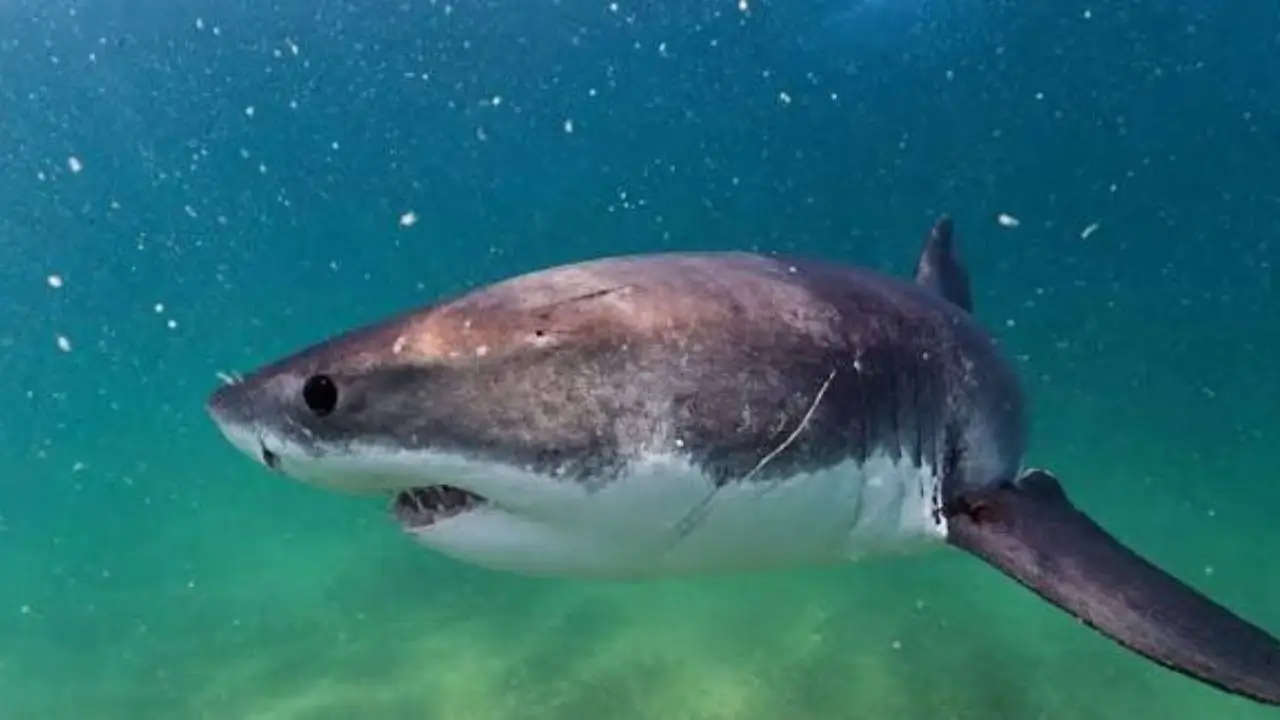
Few animals inspire as much fascination as the great white shark. Its unmistakable shape, powerful body, triangular teeth, and reputation as an apex predator have made it one of the most recognizable creatures in the sea. Yet popular culture has often reduced this remarkable animal to a frightening image. In reality, great white sharks are complex predators with sophisticated senses, remarkable swimming abilities, and an important role in marine ecosystems.
Great white sharks belong to the shark family Lamnidae and are scientifically known as Carcharodon carcharias. They inhabit coastal and offshore waters in several parts of the world, generally preferring temperate and subtropical environments. Some individuals travel enormous distances during their lifetimes, moving between feeding areas and other locations according to seasonal conditions and biological needs.
Their reputation can make it easy to forget that humans and great white sharks occupy very different worlds. A great white is built for hunting marine animals, not for interacting with people. Its behavior is shaped by instinct, prey availability, water temperature, and environmental conditions. Understanding those factors gives us a much clearer picture of the animal than sensational stories ever could.
The great white shark is also a subject of scientific interest because many aspects of its life remain difficult to observe directly. Researchers continue studying migration, reproduction, social interactions, feeding behavior, population trends, and individual movement patterns. Each discovery adds another piece to the story of a predator that has been evolving in the oceans for millions of years.
Physical Characteristics That Make the Great White Shark Such an Effective Predator
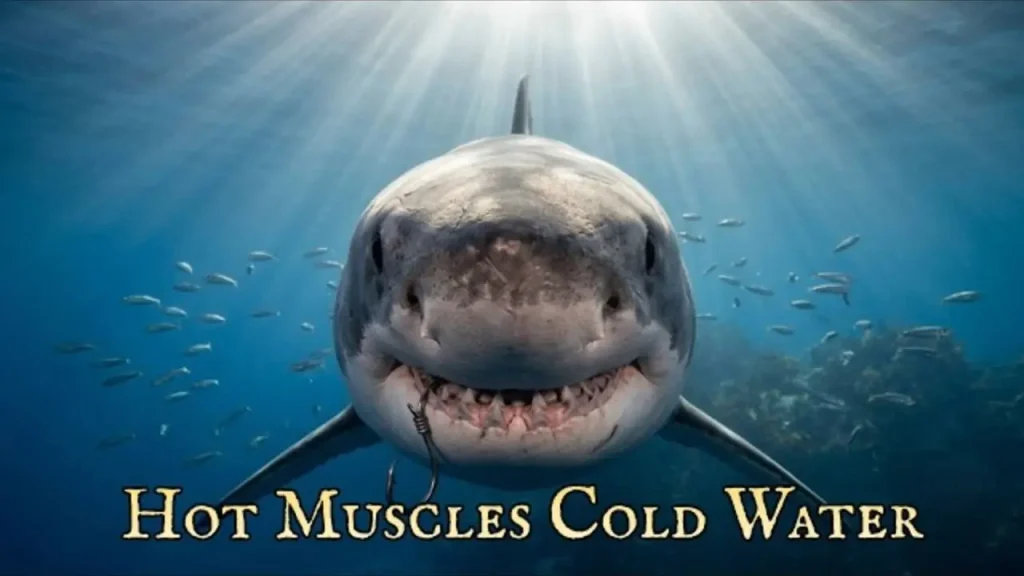
The great white shark has a body designed for speed, power, and efficiency. Adults typically have a broad, muscular shape that narrows toward the tail. Their upper bodies are generally gray or gray-brown, while the underside is much lighter. This countershading helps break up the shark’s outline when viewed from different directions, making it less conspicuous against either the darker ocean depths or the brighter surface.
Its most famous feature is its mouth. Great white sharks possess rows of large, serrated teeth that are designed to cut through flesh. Teeth are continually replaced throughout a shark’s life, meaning a lost tooth is not necessarily a permanent problem. When feeding on large prey, the shark can use its jaws and body movements together to tear pieces from an animal rather than relying on chewing in the way humans do.
Size is another reason these sharks command attention. Large great whites can reach several meters in length, although claims about exceptionally enormous individuals are often difficult to verify. Females tend to grow larger than males, a pattern seen in many shark species. Weight varies considerably according to length, age, sex, and body condition, so a single number cannot accurately describe every adult.
The shark’s tail is equally important. Its powerful caudal fin provides the thrust needed for rapid acceleration, while the pectoral and dorsal fins contribute to stability and maneuverability. Great whites are capable of sudden bursts of speed when pursuing prey, but they also spend considerable time cruising efficiently through the water. Their bodies allow them to balance energy conservation with explosive movement when hunting requires it.
A Highly Developed Sensory System
Great white sharks do not depend on eyesight alone to locate prey. Their sensory systems are remarkably sophisticated. They can detect chemical traces in the water, sense vibrations produced by moving animals, and perceive electrical signals associated with muscle activity.
Specialized structures around the head, known as the ampullae of Lorenzini, help sharks detect weak electrical fields. This ability can be particularly useful when prey is nearby but difficult to see. Their sense of smell is also highly developed, although popular descriptions sometimes exaggerate just how far away a shark can detect a particular substance.
These abilities work together. A shark may receive information from smell, movement, electrical signals, pressure changes, and vision before deciding how to approach something in the water. Rather than thinking of the great white as an animal that simply sees prey and attacks, it is more accurate to view hunting as a process involving multiple sensory systems.
Where Great White Sharks Live and Why They Travel Long Distances
Great white sharks are distributed across several major ocean regions. They are associated with temperate and subtropical waters and are particularly well known from areas around southern Africa, Australia and New Zealand, North America, parts of South America, and other suitable coastal environments. Their presence can change with season, prey availability, water temperature, and the movement patterns of individual sharks.
Some great whites are closely associated with coastal feeding areas. Others travel far offshore and undertake long migrations. These journeys can cover thousands of kilometers, revealing that the species is much more mobile than the image of a shark constantly circling a single coastline suggests.
| Field | Details |
|---|---|
| Focus Keyword | great white shark |
| SEO Title | Great White Shark: Facts, Habitat, Behavior, Diet and Conservation |
| Meta Title | Great White Shark: Facts, Habitat, Behavior and Conservation |
| Meta Description | Great white shark facts, habitat, diet, behavior, size, hunting skills, and conservation explained in a detailed guide. |
| Slug | great-white-shark |
| Category | News |
| Article Type | Informational |
| Headings | 5 Main H2 Headings |
| FAQs | 10 FAQs |
Migration is one of the most intriguing aspects of great white biology. Researchers have documented individuals moving between different regions and returning to important feeding grounds. These journeys are energetically expensive, so they likely reflect significant biological advantages, including access to seasonal prey or suitable environmental conditions.
Important Feeding Areas
Certain marine locations become famous because great white sharks regularly gather there at particular times of year. These areas often have abundant prey, such as seals or other marine mammals. When food availability changes, sharks may alter their movements accordingly.
Their preferred habitat is therefore not simply determined by water temperature. A suitable area must provide the right combination of conditions. Food, currents, depth, seasonal patterns, reproduction, and other environmental factors can all influence where an individual shark spends time.
Young sharks may also use different habitats from mature adults. Their diets and energetic requirements change as they grow, and smaller individuals may be more vulnerable to larger predators. Habitat use can therefore shift throughout a shark’s life.
Long-Distance Ocean Travelers
Some great whites undertake impressive offshore journeys. During these migrations, they may spend extended periods in open water rather than remaining near a familiar coastline. Scientists have used tagging technology to learn more about these movements, including how individuals travel through different depths and regions.
These discoveries have changed the way researchers understand the species. The great white shark is not simply a coastal predator. It is a highly mobile marine animal whose life may involve a series of feeding grounds, migration routes, and offshore environments.
What Great White Sharks Eat and How They Hunt
The diet of a great white shark changes as the animal grows. Younger sharks tend to feed more heavily on fish and smaller marine animals. As they become larger and more powerful, their diet can include seals, sea lions, dolphins, and other substantial prey in areas where those animals are available.
The shift makes biological sense. A growing shark needs increasing amounts of energy, and larger prey can provide a significant meal. Great whites are particularly well known for targeting energy-rich marine mammals. Their hunting strategy can vary according to the prey species, location, depth, and circumstances.
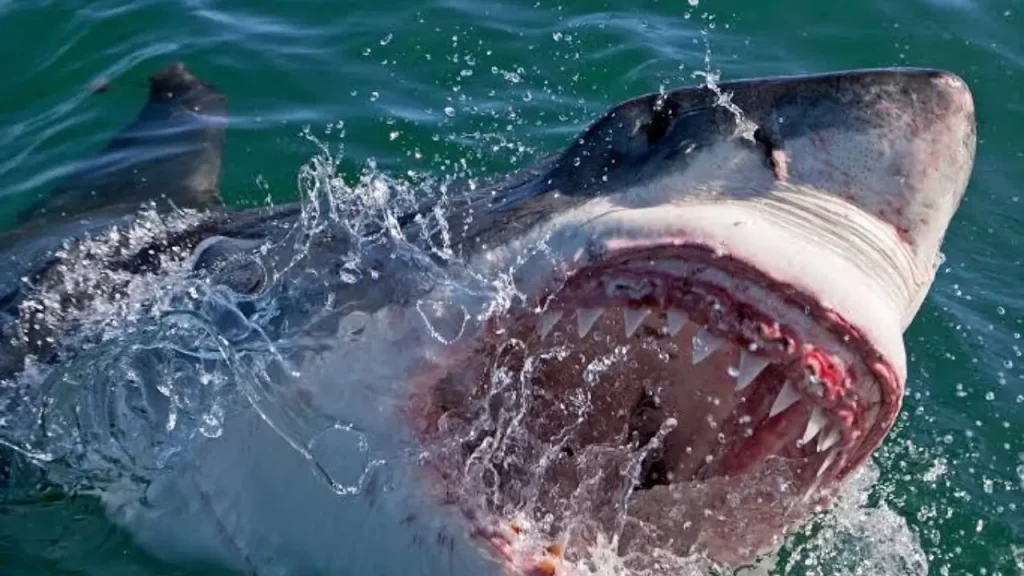
One of the most recognizable hunting behaviors is the dramatic upward attack sometimes called breaching. In suitable conditions, a shark may accelerate from deeper water toward prey near the surface and launch partly or completely out of the water. This spectacular behavior has been observed in places where seals are important prey.
However, breaching is not the standard way every great white feeds. Much of their hunting happens below the surface and is far less dramatic. A shark may approach quietly, circle or reposition itself, and then make a rapid attack. The animal’s reputation for constant aggression does not accurately describe the range of behaviors observed in the wild.
Why Seals Can Be Valuable Prey
Marine mammals contain substantial amounts of fat, which makes them energetically valuable to a large predator. Great whites may therefore spend time around areas where seal colonies or other suitable prey are concentrated.
A shark approaching a seal must balance speed and precision. Seals are agile swimmers and can change direction rapidly. The shark’s combination of sensory detection, acceleration, maneuverability, and powerful jaws gives it the tools required to pursue such prey.
Great whites may also investigate unfamiliar objects in the water. Scientists have documented approaches and bites involving objects that were not intended prey. This behavior can sometimes contribute to incidents involving humans, particularly when visibility is poor or a person is near the surface.
Great White Sharks and Humans: Separating Reality From Reputation
The relationship between people and great white sharks is complicated by fear and misunderstanding. Great whites are capable predators, and documented unprovoked encounters with humans do occur. However, the existence of these incidents does not mean that great whites routinely hunt people.
Humans are not the normal target of a great white shark’s diet. In many reported encounters, researchers have considered possibilities such as investigation, mistaken identification, or a single exploratory bite rather than sustained predation. The circumstances of each encounter differ, so broad explanations should be treated carefully.
A bite from a great white can nevertheless cause severe injury because of the animal’s size and jaw structure. This is why sensible precautions matter in waters where great whites are known to occur. Swimming close to colonies of marine mammals, entering the water alone in areas with known shark activity, and remaining in conditions with poor visibility can increase uncertainty.
At the same time, fear should not erase the ecological importance of these animals. Great white sharks have a legitimate place in marine ecosystems, and humans are visitors to an environment where these predators have evolved to hunt other marine animals.
Why Shark Behavior Is Often Misunderstood
Movies and television have played a major role in shaping public perceptions of great whites. Dramatic depictions frequently portray sharks as deliberate human hunters that relentlessly pursue swimmers. Real behavior is more varied.
A wild shark may investigate an object, avoid it, pass through an area without showing interest, or approach and then leave. Animal behavior is influenced by context. Hunger, age, previous experience, prey availability, environmental conditions, and individual temperament can all affect what happens during an encounter.
This does not make a close encounter harmless. A large predator should always be treated with caution. But understanding the difference between capability and typical behavior helps create a more accurate picture of the species.
Reproduction, Growth, and the Hidden Life of Great White Sharks
Some of the least understood aspects of great white shark biology involve reproduction. Unlike many fish that release eggs into the surrounding environment, great white sharks give birth to live young. Their reproductive process is difficult to study because mating and birth occur in locations that are rarely observed directly.
Young sharks develop inside the mother and are born as fully formed miniature predators. Scientists believe that the developing embryos receive nutrition during gestation, but many details of reproduction remain difficult to document. The rarity of direct observations has made great white reproduction an area of continuing research.
Newborn sharks are considerably smaller than adults and face a different set of survival challenges. They must find food while avoiding predators and other dangers. As they grow, their physical abilities and dietary needs change, gradually allowing them to exploit larger prey.
Growth is relatively slow compared with many common fish species. Great whites take years to reach maturity, which has major implications for conservation. A species that reproduces slowly cannot necessarily recover quickly after substantial population losses.
Why Age and Growth Matter for Conservation
Long-lived animals with delayed maturity are particularly sensitive to human pressures. If adult sharks are removed from a population, replacing them may take many years because younger individuals need time to mature and reproduce.
This is one reason scientists pay close attention to population structure rather than simply counting sharks. The number of mature breeding animals can be especially important when evaluating the long-term condition of a population.
Modern research methods have improved scientists’ ability to study great whites without capturing them repeatedly. Identification photographs, tagging programs, genetic research, acoustic monitoring, and other techniques can reveal movement and population information while reducing the need for direct handling.
Conservation Challenges and the Future of the Great White Shark
Great white sharks face a variety of pressures, including accidental capture in fishing equipment, targeted fishing in some regions, habitat changes, declining prey availability, pollution, and other human-related impacts. Their slow reproductive rate can make recovery particularly challenging when mortality becomes excessive.
Conservation efforts vary from one region to another. Some governments have introduced protections, restrictions on fishing, monitoring programs, or measures designed to reduce interactions between sharks and people. The effectiveness of these measures depends on local conditions and how consistently they are implemented.
Protecting great white sharks is not simply about saving a famous animal. Large predators can influence marine ecosystems through their feeding relationships and movements. Their presence is part of the ecological structure of healthy ocean environments.
There is also an economic and cultural dimension. In some areas, people travel specifically to observe great white sharks, creating opportunities for tourism and education. Responsible wildlife tourism can help people understand these animals while supporting local communities, although it must be managed carefully to avoid changing natural behavior.
The Role of Research
Continued scientific research is essential because many questions remain unanswered. Researchers want to better understand population size, migration routes, breeding areas, juvenile survival, genetic diversity, and responses to changing ocean conditions.
Technology is making this work increasingly sophisticated. Tracking devices can provide information about movement and diving patterns, while genetic techniques can help reveal relationships between populations. Long-term observation is particularly valuable because individual sharks may live for decades and use different habitats at different stages of life.
Public understanding matters too. Conservation becomes more effective when people recognize great white sharks as wildlife rather than simply as symbols of danger. Accurate information can encourage safer behavior around sharks while reducing unnecessary fear and supporting evidence-based protection.
Conclusion
The great white shark is far more than the frightening image often presented in popular entertainment. It is a highly specialized marine predator with extraordinary senses, impressive physical abilities, complex movements, and an important ecological role.
From the coastal waters where it searches for marine mammals to the vast offshore routes traveled during migration, the species demonstrates how much remains to discover about life beneath the ocean surface. Its slow growth and reproduction also remind us that wildlife populations cannot always recover quickly when human pressures become intense.
Learning about great white sharks does not require ignoring the risks associated with encounters. Respect and caution are appropriate whenever people share the water with large wild predators. But fear becomes much more manageable when it is replaced with knowledge.
The great white remains one of the ocean’s most compelling animals precisely because so much of its life remains hidden. Every migration record, scientific observation, and conservation effort helps reveal another part of the story—and strengthens our understanding of a predator that has occupied the world’s oceans for an extraordinary span of evolutionary history.
Frequently Asked Questions About Great White Sharks
1. How big can a great white shark get?
Large great white sharks can reach several meters in length. Females generally grow larger than males. Reports of extremely large individuals exist, but many extraordinary size claims are difficult to verify scientifically.
2. Where are great white sharks found?
Great white sharks occur in temperate and subtropical waters in several regions, including parts of North America, southern Africa, Australia, New Zealand, and South America. Their distribution changes according to environmental conditions and prey availability.
3. What do great white sharks eat?
Their diet varies with age and location. Younger sharks often consume fish and smaller marine animals, while larger individuals may prey on seals, sea lions, dolphins, and other marine mammals.
4. Are great white sharks dangerous to humans?
Great white sharks are powerful predators and can seriously injure a person during an encounter. However, humans are not their normal prey, and encounters should not automatically be interpreted as deliberate attempts to hunt people.
5. How fast can a great white shark swim?
Great white sharks can produce impressive bursts of speed, particularly when attacking prey. Their exact speed varies depending on circumstances, and commonly repeated maximum-speed figures should be treated cautiously.
6. Can great white sharks jump out of the water?
Yes. Some great whites breach the surface while attacking prey, particularly in areas where seals or other marine mammals are present near the surface. This behavior is spectacular but is not representative of every hunting attempt.
7. Do great white sharks migrate?
Yes. Some individuals undertake very long migrations between feeding areas and other important habitats. Tracking studies have shown that certain sharks can travel thousands of kilometers.
8. How long do great white sharks live?
Great white sharks can live for several decades. Their relatively long lives, slow growth, and delayed maturity mean that populations can be vulnerable to excessive mortality.
9. How do great white sharks find their prey?
They use several senses, including vision, smell, vibration detection, and electroreception. Combining information from these systems helps them locate and evaluate potential prey in different underwater conditions.
10. Are great white sharks endangered?
Their conservation status and population conditions can vary by region, and international assessments consider the species vulnerable to extinction. Fishing pressure, accidental capture, changes in prey availability, and their slow reproductive rate are among the factors that can affect populations. Protecting important habitats and managing human impacts are important parts of long-term conservation.
