


Introduction
Pluribus begins with a question that sounds almost harmless: what if everyone in the world suddenly became happy? Most stories would treat that development as a miracle. Vince Gilligan’s series takes the opposite approach. It asks what happens when happiness becomes so universal, so complete and so strangely coordinated that individuality itself begins to feel endangered.
At the center of the story is Carol Sturka, a novelist whose personality is almost perfectly suited to resisting the cheerful new reality surrounding her. She is difficult, skeptical, lonely and deeply uncomfortable with the way people begin behaving after a mysterious event changes humanity. Rather than embracing the apparent improvement in human life, Carol becomes increasingly suspicious of it.
That contradiction gives Pluribus its unusual identity. The series is science fiction, but it is also a character drama, a dark comedy and a philosophical examination of free will. Instead of relying only on spectacular futuristic technology, it creates tension from something much more familiar: the desire to belong. The result is a story about what people might sacrifice for peace, connection and happiness.
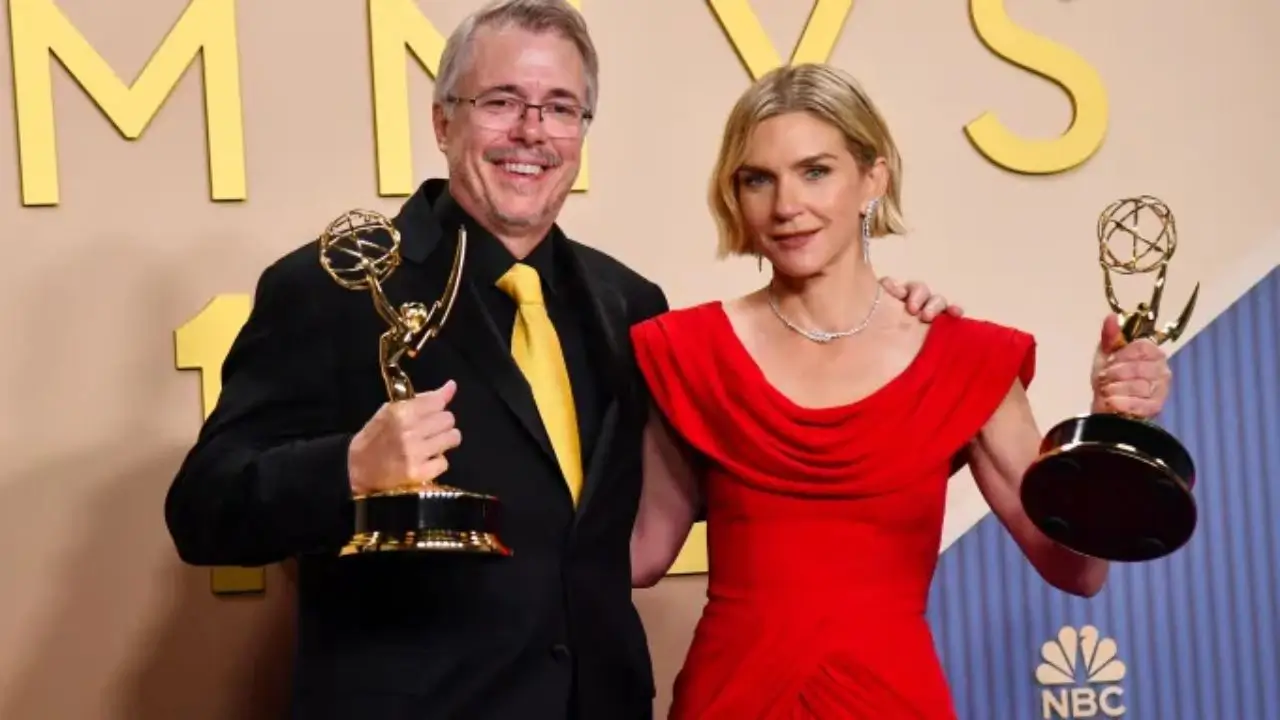
Apple TV categorizes the series as a drama and science-fiction production and identifies Rhea Seehorn as Carol, alongside Karolina Wydra and Carlos-Manuel Vesga. The series was created by Vince Gilligan, best known for his work on Breaking Bad and Better Call Saul.
1. What Is Pluribus About?

The basic premise of Pluribus is deliberately mysterious. An astronomical discovery triggers a dramatic change on Earth, creating a reality that Carol Sturka finds deeply disturbing. People appear happier, more cooperative and more connected than before, but Carol does not experience the transformation in the same way. Instead, she sees something unsettling beneath the surface.
The show’s central conflict therefore does not depend on a traditional villain. There is no simple monster or dictator standing in the way of humanity. The threat is much harder to define because the transformed world appears peaceful. People are willing to help one another. Conflict seems reduced. Emotional barriers begin disappearing. From an ordinary perspective, these might sound like improvements.
Carol, however, cannot accept the idea that a perfect society is automatically a good society.
That creates the series’ most intriguing question: Is happiness still meaningful if people lose the freedom to choose whether they want it?
The title itself adds another layer to the concept. “Pluribus” comes from Latin and is associated with the idea of “many” or “many people.” That concept fits a story concerned with the relationship between the individual and the collective. Carol is one person struggling against a world increasingly defined by togetherness.
A World That Looks Better Than It Feels
One of the cleverest aspects of the premise is the contrast between appearance and reality. A dangerous dystopia does not always need ruined cities, authoritarian soldiers or endless darkness. Sometimes the most disturbing environment can be one in which everyone smiles.
That approach allows Pluribus to explore social conformity from an unusual direction. Most dystopian stories focus on people being forced to obey. This series is more interested in what happens when people genuinely want the same thing and begin losing the desire to be different.
For Carol, that is frightening. Her resistance is not necessarily comfortable or admirable at every moment, but it makes her one of the few characters capable of questioning what everyone else has accepted.
2. Rhea Seehorn and the Character of Carol Sturka
Rhea Seehorn is the emotional center of Pluribus. Audiences familiar with her work as Kim Wexler in Better Call Saul already know her ability to communicate complicated emotions without excessive exposition. As Carol Sturka, Seehorn gets a very different kind of role: a woman who is surrounded by apparent happiness while becoming increasingly isolated from everyone around her.
Carol is not written as a conventional heroic protagonist. She can be abrasive, selfish, impatient and difficult to understand. Those characteristics are essential to the story because they prevent the audience from accepting her perspective automatically. Sometimes she appears perceptive. At other times, she appears stubborn. The uncertainty keeps the viewer engaged.
Her personality also creates an unusual relationship between comedy and drama. A character who refuses to participate in a seemingly perfect society can be inherently funny, particularly when everyone else is determined to be pleasant. Yet the humor gradually becomes uncomfortable because Carol’s complaints may contain truths that nobody else wants to confront.
The series therefore depends heavily on Seehorn’s performance. Carol spends much of the story reacting to people whose behavior has changed dramatically, and those reactions must carry information that the dialogue does not always state directly.
Why Carol Matters
Carol represents individuality in its messiest form.
She is not an ideal human being. She has flaws, disappointments and emotional baggage. Yet those imperfections are precisely what make her human. If humanity becomes perfectly synchronized, then the unpleasant qualities of individual personality may begin disappearing along with the qualities that make people distinct.
| Section | Details |
|---|---|
| SEO Title | Pluribus: Story, Cast, Themes, Episodes & Everything You Need to Know |
| Meta Title | Pluribus: Story, Cast, Themes & Episodes |
| Meta Description | Pluribus follows a novelist confronting a mysterious world transformed by collective happiness in Vince Gilligan’s sci-fi drama. |
| Slug | pluribus |
| Category | Tech |
| Focus Keyword | pluribus |
| Introduction | Overview of Pluribus, its mysterious premise, Carol Sturka, and the central conflict between happiness and individuality. |
| H2 1 | What Is Pluribus About? |
| H2 2 | Rhea Seehorn and the Character of Carol Sturka |
| H2 3 | The Meaning of Happiness in Pluribus |
| H2 4 | Pluribus as Science Fiction, Drama, and Dark Comedy |
| H2 5 | Why Pluribus Has Become Such an Interesting Television Experiment |
| Conclusion | Summary of the show’s themes, characters, mystery, and questions about freedom and individuality. |
| FAQs | 10 relevant questions covering the story, creator, cast, genre, title meaning, episodes, conten |
That makes Carol’s resistance more meaningful than simple rebellion. She is fighting for the right to remain herself, even when being herself is uncomfortable.
Her relationships with other characters become increasingly important because they challenge her assumptions. Karolina Wydra’s Zosia, for example, becomes an important presence in the story, while Carlos-Manuel Vesga’s Manousos adds another dimension to the expanding world. Apple TV lists both performers among the series’ principal cast.
3. The Meaning of Happiness in Pluribus
At first glance, happiness seems like the easiest theme in the series to understand. People generally want to be happy. Families want peaceful lives. Communities want less conflict. Individuals want security and meaningful relationships.
Pluribus takes those ordinary desires and pushes them to an extreme.
What happens when happiness is no longer something a person pursues, but something imposed by circumstances beyond personal control? What if sadness, anger, loneliness and dissatisfaction are not merely unpleasant emotions but essential parts of individual freedom?
The show does not suggest that misery is inherently good. Carol’s loneliness is hardly presented as an ideal lifestyle. Instead, it explores the uncomfortable possibility that a meaningful human life includes negative emotions as well as positive ones.
Grief can reveal attachment. Anger can reveal injustice. Loneliness can encourage self-reflection. Doubt can prevent people from accepting dangerous ideas too quickly.
Remove all of those experiences, and people might become happier—but they might also become less recognizably human.
Individuality Versus Collective Peace
This is where Pluribus becomes more philosophical than conventional science fiction.
Imagine a society in which everyone understands everyone else perfectly. Arguments disappear because people naturally agree. Violence becomes rare because everyone shares the same emotional direction. Personal conflicts become easier to solve because individuals no longer possess radically different desires.
It sounds wonderful.
But such a society could also eliminate disagreement, privacy and genuine independence.
The series does not offer a simple answer to that dilemma. Instead, it places Carol inside the problem and forces viewers to decide whether they would accept the new world themselves.
That ambiguity is one of the show’s greatest strengths.
4. Pluribus as Science Fiction, Drama, and Dark Comedy
A major reason Pluribus stands apart from more conventional science-fiction series is its mixture of genres. The show can move from unsettling science-fiction ideas to intimate character moments and darkly humorous situations without completely abandoning its central tone.
The humor is particularly important because the premise could otherwise become relentlessly bleak. Carol’s personality creates comic friction with a world that seems determined to be cheerful. The contrast between her irritation and other people’s kindness can be genuinely funny, even when the underlying situation is disturbing.
At the same time, the comedy never completely removes the sense of danger.
That balance gives the series a distinctive atmosphere. It is not simply a mystery show asking viewers to discover what happened. It is also a character study asking why one person would reject something that everyone else considers wonderful.
A Slower, More Psychological Approach
The series favors atmosphere and character development rather than constantly explaining its mysteries. That can require patience from viewers who expect every episode to deliver a major revelation.
The first season’s episode structure reflects this approach. Apple TV lists episodes including “We Is Us,” “Pirate Lady,” “Grenade,” “Please, Carol,” “Got Milk,” and “HDP,” with individual episodes ranging from roughly the low-forties to just over an hour.
Each episode adds another piece to the larger puzzle while developing Carol’s understanding of the changed world. The result is a narrative that rewards viewers who pay attention to small behavioral details rather than waiting only for major plot twists.
That style also makes the show more rewatchable. A second viewing can change the meaning of seemingly ordinary conversations because viewers already understand more about the world than they did at the beginning.
5. Why Pluribus Has Become Such an Interesting Television Experiment

One reason Pluribus attracts attention is the creative pedigree behind it. Vince Gilligan is associated with two highly regarded television dramas, Breaking Bad and Better Call Saul. With Pluribus, he moves into original science fiction while retaining his interest in morally complicated characters.
That transition is significant. Rather than adapting an existing franchise or building the series around familiar science-fiction mythology, the show establishes its own rules and asks viewers to discover them gradually.
The decision to place Rhea Seehorn at the center is equally important. Instead of using a traditionally action-oriented protagonist, the story revolves around a novelist whose primary weapons are skepticism, intelligence and stubbornness.
This creates a very different kind of suspense.
What Makes the Series Different
The most interesting feature of Pluribus may be that its central conflict is ideological rather than physical.
Carol does not simply need to escape from danger. She needs to understand what has happened to humanity and determine whether the new world deserves to survive. That makes ordinary conversations surprisingly important. A smile can become suspicious. An act of kindness can raise questions. A peaceful interaction can feel more threatening than an argument.
This inversion of familiar storytelling expectations is what gives the series its identity.
Apple TV’s official description captures the premise in a deliberately provocative sentence: the most miserable person on Earth must save the world from happiness.
That line works because it contains the entire contradiction at the heart of the show. Carol may be unpleasant, but the world she opposes may be even more unsettling precisely because it looks so pleasant.
Conclusion
Pluribus is a science-fiction drama built around a deceptively simple idea: what if humanity achieved happiness at the cost of individuality?
Its strength lies in refusing to make the answer obvious. Carol Sturka is not a flawless hero, and the transformed world is not immediately recognizable as evil. Instead, the series operates in the uncomfortable space between freedom and security, individuality and community, happiness and authenticity.
Rhea Seehorn gives the story its emotional center, portraying Carol as a complicated woman who refuses to accept easy answers. Vince Gilligan’s creative direction gives the series room to explore its central mystery without turning every question into a straightforward explanation.
For viewers who enjoy thoughtful science fiction, unusual mysteries and character-driven television, Pluribus offers something considerably different from a conventional futuristic thriller. Its biggest question is not simply what happened to the world. It is whether a perfect world would still be worth living in if you were no longer completely free to be yourself.
10 Frequently Asked Questions About Pluribus
1. What is Pluribus about?
Pluribus is a science-fiction drama about Carol Sturka, a novelist who finds herself living in a radically changed world after a mysterious astronomical event. Humanity appears to have entered a state of extraordinary happiness and cooperation, but Carol becomes suspicious of the transformation.
2. Who created Pluribus?
The series was created by Vince Gilligan, the television writer and producer known for Breaking Bad and Better Call Saul. Gilligan also serves as an executive producer on the series.
3. Who plays Carol in Pluribus?
Rhea Seehorn plays Carol Sturka, the central character of the series. Her performance is especially important because much of the story depends on Carol’s emotional reactions to the strange changes around her.
4. Is Pluribus a science-fiction series?
Yes. Apple TV classifies Pluribus as both a drama and science-fiction series. It combines speculative ideas with character-driven storytelling and dark comedy.
5. Why is Carol unhappy in Pluribus?
Carol is already a difficult and isolated person when the major transformation occurs. Her discomfort becomes more pronounced because the people around her appear to have embraced a new collective form of happiness that she does not trust.
6. What does the title Pluribus mean?
The title is connected to the Latin concept of “many.” That meaning fits the show’s interest in the relationship between individuals and a larger collective, particularly the tension between personal identity and shared experience.
7. Who else stars in Pluribus?
The principal cast includes Rhea Seehorn as Carol, Karolina Wydra as Zosia and Carlos-Manuel Vesga as Manousos. Vince Gilligan is also credited among the executive producers.
8. How many episodes does the first season of Pluribus have?
Apple TV currently lists six main episodes for the first season, including “We Is Us,” “Pirate Lady,” “Grenade,” “Please, Carol,” “Got Milk,” and “HDP.”
9. Is Pluribus suitable for all ages?
No. The series carries mature-content guidance and is not intended as children’s programming. Apple TV lists it with content advisories including violence and language.
10. Why should viewers watch Pluribus?
The series is worth considering for viewers who enjoy intelligent science fiction, unusual mysteries and stories that explore human behavior. Rather than relying only on action, Pluribus asks difficult questions about happiness, free will, individuality and the meaning of being human.
