


Introduction
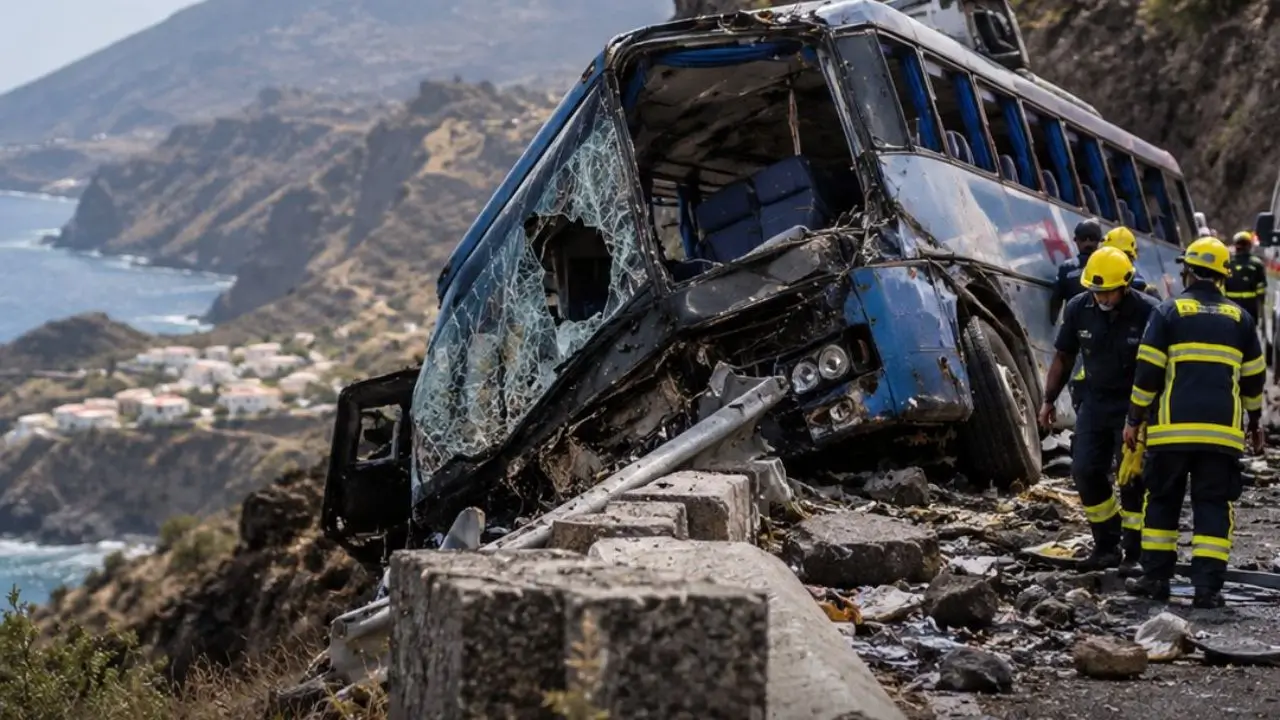
The school bus crash Cape Verde has left the island nation facing one of its most painful tragedies in recent memory. On Saturday, September 5, a passenger bus carrying students on an excursion on Fogo Island left a mountainous road and plunged into a deep ravine. At least 25 people were reported dead in the latest accounts, with several others injured and taken to hospital. The victims included children and teenagers, turning what should have been a routine educational outing into a devastating loss for families and communities.
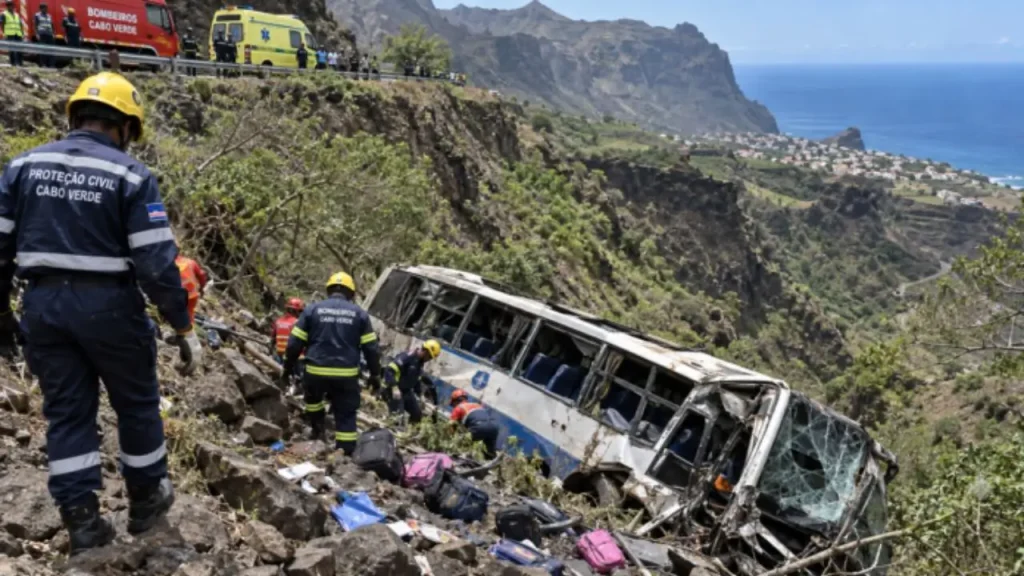
The accident happened in the Campanas de Cima area of Fogo, a volcanic island known for steep terrain and dramatic landscapes. Reports describe the bus falling roughly 30 metres into a rocky ravine, creating enormous difficulties for rescuers trying to reach those trapped inside. Emergency workers continued operating through the night, while injured passengers were transported to the São Francisco de Assis Regional Hospital.
The tragedy has also prompted a national response. President José Maria Pereira Neves described the crash as a catastrophe, while the government announced a period of national mourning. Authorities have begun investigating what caused the vehicle to leave the road, but at this stage it would be premature to blame the driver, the vehicle, the road or any other single factor. The investigation is expected to establish the sequence of events and determine whether preventable safety failures played a role.
1. What Happened in the School Bus Crash in Cape Verde?
The crash occurred on Fogo Island, one of the islands forming the West African archipelago of Cape Verde. According to reports, the bus was carrying schoolchildren during an excursion when it veered from the mountain road and plunged into a ravine. The location was particularly challenging because the surrounding landscape is steep and rocky, making access to the wreck difficult for emergency teams.
The journey was not described simply as an ordinary school commute. Reports indicate that the students were taking part in an excursion, and some accounts say the trip had become an annual tradition. The driver, who also died in the accident, was reportedly closely connected to the children he transported during the school term. That detail has added a particularly painful dimension to the disaster for the affected communities.
Initial reports varied considerably regarding the number of people killed. Some early accounts reported lower figures as rescue and recovery operations were still taking place, while later reports put the death toll at 25. This kind of variation can occur during a major disaster, especially when victims are still being recovered, hospitalized passengers later die from injuries, and authorities work to formally identify those involved.
What is clearer is the scale of the tragedy. The passengers included primary-school-age children and teenagers, according to multiple reports. Their ages and identities have understandably become a sensitive matter for families and officials, and casualty information may continue to be refined as authorities complete identification procedures.
The difficult location
Fogo is dominated by volcanic terrain, and roads in mountainous areas can present very different risks from those encountered on broad, flat highways. A vehicle leaving the roadway in such an environment can descend rapidly, leaving little room for recovery or correction.
The reported 30-metre drop also helps explain why the consequences were so severe. The bus did not simply collide with another vehicle or overturn on a flat road. It descended into a rocky ravine, making both the initial impact and the subsequent rescue operation exceptionally difficult.
2. Rescue Operations Faced a Race Against Time
When a serious road accident happens in an accessible urban area, emergency crews can often reach the vehicle within minutes using conventional routes. The circumstances on Fogo were very different. The bus came to rest in a difficult-to-access ravine, forcing rescuers to work in challenging terrain while dealing with the wreckage and injured passengers.
Reports indicate that emergency personnel worked through the night after victims began arriving at the regional hospital late on Saturday. The difficult terrain meant that reaching the crash site and extracting passengers was not a straightforward operation. Some victims were trapped in the wreckage, while others required urgent medical attention after being brought out.
The first priority in any mass-casualty accident is to identify survivors and provide immediate medical care. That can involve stabilizing seriously injured people at the scene, determining who needs the fastest hospital transfer, and coordinating transportation when medical resources are limited.
| # | Section |
|---|---|
| 1 | Introduction |
| 2 | What Happened in the School Bus Crash in Cape Verde? |
| 3 | Rescue Operations Faced a Race Against Time |
| 4 | Why the Cause of the Crash Has Not Yet Been Established |
| 5 | The Human Cost for Fogo Island and Cape Verde |
| 6 | What the Cape Verde Bus Crash Could Mean for Road Safety |
| 7 | Conclusion |
| 8 | Frequently Asked Questions |
| 9 | FAQ 1: What happened in the school bus crash in Cape Verde? |
| 10 | FAQ 2: How many people died in the Cape Verde bus crash? |
| 11 | FAQ 3: Were children among the victims? |
| 12 | FAQ 4: Where did the Cape Verde bus crash happen? |
| 13 | FAQ 5: How far did the bus fall? |
| 14 | FAQ 6: What caused the school bus crash in Cape Verde? |
| 15 | FAQ 7: Were there survivors? |
| 16 | FAQ 8: What happened after the crash? |
| 17 | FAQ 9: Has Cape Verde declared national mourning? |
| 18 | FAQ 10: Will there be an investigation int |
In this case, 18 survivors were reported to have been taken to a regional hospital in one account, with four initially described as being in critical condition. Because medical conditions can change rapidly after severe trauma, the status of injured passengers may also change as treatment continues.
Why mountain rescues are particularly difficult
A ravine accident presents several problems simultaneously. Rescue teams may have to descend steep slopes, carry equipment by hand, stabilize unstable wreckage and carefully remove injured people without worsening their injuries.
Nighttime conditions can make the work even harder. Limited visibility, uneven ground and the physical distance between the road and the wreck can slow operations considerably. In a mass-casualty situation, every delay can increase pressure on already limited emergency resources.
The Fogo crash therefore illustrates an important but often overlooked part of disaster response: saving lives depends not only on having trained medical professionals, but also on being able to physically reach people who need help.
3. Why the Cause of the Crash Has Not Yet Been Established
One of the most important facts surrounding the school bus crash Cape Verde is that authorities have not yet publicly established a definitive cause. That distinction matters. A vehicle leaving a mountain road can result from many different circumstances, and early speculation can easily turn into misinformation.
Potential factors in any investigation of this type could include road conditions, vehicle condition, mechanical failure, driver actions, visibility, speed, fatigue or an unexpected event. None of those possibilities should automatically be treated as the explanation for this crash until investigators establish evidence supporting them.
Recent reporting specifically states that the cause remains undetermined. President José Maria Neves has indicated that an inquiry would be conducted into the circumstances surrounding the disaster.
What investigators will likely examine
A serious crash investigation generally begins by reconstructing the vehicle’s final movements. Investigators may examine the road surface, tire marks, vehicle damage, steering and braking systems, maintenance records and other physical evidence.
Witness accounts can also be important. Passengers who survived, people traveling on the same route and anyone who saw the vehicle shortly before the crash may provide information about its speed, movement or behavior.
Investigators may also look at the broader circumstances surrounding the excursion. That could include the condition and suitability of the bus, the driver’s qualifications and working history, whether safety requirements were followed, and whether the route presented known hazards.
However, none of those questions should be confused with established findings. Until the official inquiry is completed, claims assigning responsibility remain speculation.
4. The Human Cost for Fogo Island and Cape Verde
Numbers can communicate the scale of a disaster, but they cannot fully express its human cost. Behind the reported death toll are individual children, teenagers, adults, parents, relatives, classmates, teachers and friends. For the families involved, the crash is not simply a national news story. It is an event that permanently changes their lives.
The fact that many of the passengers were young has made the tragedy particularly painful. A school excursion is normally associated with excitement, friendship and shared memories. Families expect their children to return home after a trip. Instead, communities on Fogo were confronted with funerals and emergency medical treatment.
Reports said that some bodies were buried soon after the crash because of their condition, while additional funerals were planned as identification and recovery efforts continued. One account reported that 18 coffins were displayed during a Sunday church service, reflecting the profound shock felt across the island.
National mourning
Cape Verde’s government declared two days of national mourning following the disaster. National mourning serves both a symbolic and practical purpose: it recognizes the scale of the loss and gives the country an opportunity to express collective sympathy to grieving families.
President José Maria Pereira Neves publicly expressed his sorrow and described the accident as a major catastrophe. His response reflected the broader national reaction, with government officials and community leaders turning their attention toward the families of those killed and the treatment of survivors.
The tragedy has also generated expressions of solidarity from outside Cape Verde. Neighboring and international political figures have offered condolences, demonstrating how a disaster in a small island nation can resonate far beyond the immediate community.
5. What the Cape Verde Bus Crash Could Mean for Road Safety
A tragedy of this magnitude inevitably raises questions about transportation safety. Those questions should not be treated as an accusation against a particular individual or organization before the investigation is complete. Instead, they can help authorities identify whether existing safety measures are adequate for school transportation and excursions in mountainous areas.
School transportation carries a special responsibility because children are among the passengers. Safe operation involves more than the vehicle itself. Driver training, passenger management, vehicle maintenance, route selection, emergency planning and communication all contribute to reducing risk.
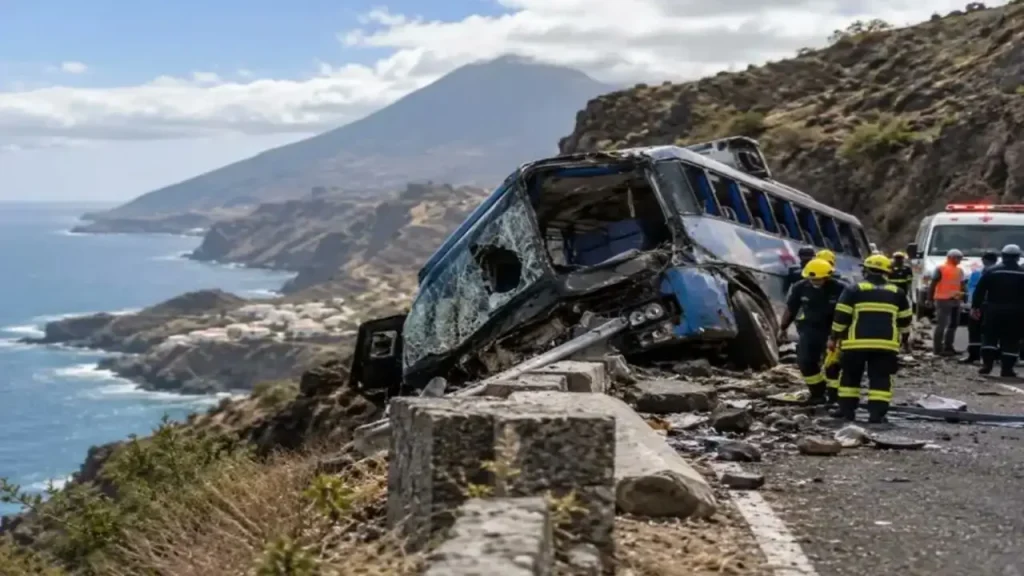
Mountain roads require additional attention. Even a road that is routinely used can become dangerous when conditions change or when a vehicle encounters an unexpected obstacle. Protective barriers, warning signs, speed controls and road maintenance can all play a role in limiting the consequences of a mistake.
The crash may therefore lead to renewed discussion about how school excursions are organized on Fogo and elsewhere in Cape Verde. If investigators identify a preventable factor, authorities may have an opportunity to strengthen procedures and reduce the likelihood of another tragedy.
Lessons beyond Cape Verde
The broader lesson is that transportation safety should be treated as a system rather than a single rule. A well-maintained bus is important, but so is a properly trained driver. A skilled driver matters, but so does a safe road. A safe road is valuable, but emergency services must also be able to respond quickly when something goes wrong.
For remote and mountainous communities, emergency access deserves particular attention. A crash cannot always be prevented, but improving rescue routes, communications and medical preparedness can sometimes improve survival when an accident does occur.
The Cape Verde disaster is a reminder that safety planning must account for the environment in which people actually travel. A procedure designed for flat urban roads may not be sufficient for a winding mountain route with steep drops and difficult access.
Conclusion
The school bus crash Cape Verde has brought enormous grief to Fogo Island and the wider nation. At least 25 people have been reported dead in the latest accounts, while survivors have required hospital treatment following a devastating plunge into a ravine. The victims included children and teenagers, making the loss especially painful for their families and communities.
Yet many important questions remain unanswered. Authorities have not established a definitive cause, and it would be irresponsible to assign blame before investigators complete their work. The investigation will need to determine what happened in the moments before the bus left the road and whether any mechanical, human or environmental factors contributed.
For Cape Verde, the immediate priority is caring for survivors, supporting grieving families and honoring those who died. The longer-term responsibility will be learning from the disaster. If the investigation identifies weaknesses in road conditions, vehicle maintenance, driver procedures, emergency response or excursion planning, those lessons can become part of a stronger safety system.
The people lost in the Fogo Island crash were more than a statistic. They were members of families and communities whose absence will be felt for years. Remembering them also means taking seriously the questions their deaths have raised about how children are transported and protected on difficult roads.
Frequently Asked Questions
1. What happened in the school bus crash in Cape Verde?
A passenger bus carrying students on an excursion on Fogo Island left a mountainous road in the Campanas de Cima area and plunged into a ravine. Reports describe a drop of roughly 30 metres. The crash caused a large number of deaths and injuries.
2. How many people died in the Cape Verde bus crash?
The latest reports available as of September 7, 2026, put the death toll at at least 25 people. Earlier reports gave lower figures as rescue, recovery and identification operations continued, so casualty numbers changed during the initial reporting period.
3. Were children among the victims?
Yes. Reports indicate that the bus was carrying schoolchildren, including primary-school pupils and teenagers. The presence of so many young passengers has made the tragedy especially devastating for families and local communities.
4. Where did the Cape Verde bus crash happen?
The accident happened on Fogo Island, in the Campanas de Cima area associated with the municipality of Santa Catarina do Fogo. Fogo is a volcanic island characterized by mountainous terrain, making rescue operations particularly challenging.
5. How far did the bus fall?
Reports say the bus plunged approximately 30 metres into a steep, rocky ravine after leaving the road. The depth and difficult terrain contributed significantly to the challenges faced by rescue personnel.
6. What caused the school bus crash in Cape Verde?
The definitive cause has not yet been established. Authorities are investigating the circumstances of the accident, and available reporting does not provide enough evidence to say whether driver actions, mechanical problems, road conditions or another factor caused the crash.
7. Were there survivors?
Yes. Several people survived the crash and were taken to a regional hospital for treatment. One report said 18 survivors were transported for medical care, with some initially described as being in critical condition.
8. What happened after the crash?
Emergency crews worked through the night to reach victims and remove people from the wreckage. Injured passengers were transported for medical treatment, while authorities began the process of recovering and identifying those who had died.
9. Has Cape Verde declared national mourning?
Yes. The government announced two days of national mourning following the tragedy. National leaders, religious figures and local communities have expressed condolences and participated in commemorative events.
10. Will there be an investigation into the crash?
Yes. Authorities are conducting an inquiry into the circumstances surrounding the accident. The investigation is expected to examine the events leading to the bus leaving the road and determine whether any factors contributed to the disaster
